
Affiliate marketing is only effective during BFCM when your program is ready before the sale begins.
Affiliates need time to join your program, understand your offer, create content, and start promoting. Your team also needs time to finalize commissions, prepare campaign assets, set up tracking, and automate the operational work behind the program.
This article gives you a timeline for your affiliate marketing prep during BFCM. It shows you exactly when to brief affiliates, roll out content, increase commissions, and build urgency, helping you stay organized and manage your partners to maximize results.
Want the full playbook on how to set up your affiliate strategy for BFCM? Our BFCM Affiliate Playbook includes the strategies and tactics you need to prepare your program for the sale weekend.
Download the BFCM Affiliate Playbook →
Why timing matters for your BFCM affiliate campaigns
Your affiliate program needs to be ready to drive demand and support buying decisions when BFCM starts. This means early preparation from both your affiliates and your team.
Your affiliates need time to understand your products and offers, create content, and build familiarity with your brand before shoppers are ready to buy. If you leave this preparation until the last minute, you limit how much they can contribute to driving traffic.
Your team needs that runway too. You need time to finalize incentives, prepare campaign assets, and make sure tracking and payouts are working properly. Starting early gives you room to activate affiliates, see what's working, and make adjustments before the promotion goes live.
By the time BFCM arrives, your affiliates should already be talking about your brand and your team should be monitoring performance, managing communications, and making adjustments throughout the sale.
The earlier you prepare, the more time you have to turn your affiliate program into a channel that can actively drive conversions during BFCM.
The affiliate & influencer campaign calendar for BFCM
If you’re figuring out exactly what to do and when, here’s the calendar you need to put your affiliate strategy in place.
60–45 days before BFCM: Set your targets and program structure
Before recruiting affiliates, decide what you want the program to accomplish.
Start by defining:
- Affiliate revenue targets: How much revenue do you expect affiliates to contribute, and what percentage of BFCM sales should come from the channel?
- Partner mix: Decide whether you'll focus on content partners, influencers, customers-as-affiliates, or a combination.
- Program infrastructure: Make sure your affiliate platform is selected and integrated before recruitment begins.
This gives you a clear direction to recruit the right affiliates and build the partner mix you need to reach your BFCM goals.
50–40 days before BFCM: Finalize your incentives
Once you've established what the program needs to achieve, decide the economics.
Define your:
- Base commission structure
- Tiered payouts
- BFCM bonuses
- Subscription commissions, where relevant
- Payout terms
Make these terms clear enough so that affiliates understand what they can earn and what they need to do to reach higher-value tiers.
This is also when you should decide which behaviors you want your incentives to encourage. Tiered payouts, bonuses, and performance-based rewards can give stronger affiliates a reason to increase their output during BFCM.
5–30 days before BFCM: Recruit and onboard your affiliates
Once your plan is in place, recruitment is the next step. Reach out to the partner groups that fit your program, including:
- Existing customers
- TikTok creators
- Micro-influencers
- Content partners
Build a qualified pipeline rather than treating every potential partner equally.
When choosing creators and influencers, look at factors such as audience fit, engagement, content quality, niche, and other signals that indicate whether someone is likely to be a useful partner.
Read how Warmies built a more focused approach to creator recruitment.
Your existing customers can also be a valuable recruitment pool. Focus on people with an existing relationship with your brand, such as recent purchasers, repeat customers, and recurring buyers.
You can also look for people who are already talking about your brand on social media. Tagged posts, product mentions, and organic recommendations can surface potential partners who already have an affinity for your products.
Four weeks before BFCM, aim to have your core group of affiliates confirmed and start onboarding them.
When onboarding affiliates, give them a welcome kit containing:
- Their affiliate link and program access
- Commission and incentive details
- Campaign assets
- Product information and key messages
- Guidelines for promoting your brand and BFCM offer
30–20 days before BFCM: Equip affiliates with content and tighten attribution
Once affiliates are onboarded, give them the resources they need so they can start creating BFCM content without waiting on your team for every asset or piece of information.
Create a central set of resources that includes:
- Product images and campaign creatives
- BFCM offers and deal details
- Key product messages
- Captions and content prompts
- High-performing affiliate and UGC examples
- Campaign guidelines and compliance information
Read about how you can help your affiliates create better content.
A centralized content library gives your team a space to collect affiliate content as it comes in. Your strongest examples can then become inspiration for other affiliates and assets you can reuse after BFCM.
Besides equipping affiliates with resources, use this period to tighten attribution and safeguard your program from fraud.
- Switch static affiliate codes to single-use Safelinks. With these, each click generates a unique code that can only be used once, reducing the risk of coupon leakage.
- Review your attribution and fraud-protection settings. Make sure your tracking rules are set up correctly before affiliate traffic increases, and that you have protections in place to flag suspicious activity.
- Check for coupon leaks and suspicious referrers so you can address issues before you start paying out. Review affiliate activity before payouts so you can identify and address unusual referral or coupon activity before it affects your margins.
20–15 days before BFCM: Set up payout systems and activate communications
By this stage, your affiliates should have the resources they need. The focus now shifts to keeping them engaged and making sure the operational side of the program is ready for higher BFCM activity.
Set up a shorter payout cycle. Since BFCM is a concentrated selling period, don't make affiliates wait weeks to see their earnings.
Set up automated payouts that pay out weekly so affiliates don't have to wait to receive their earnings.
Set up your affiliate communication flows. Build automated reminders and updates that keep affiliates moving through the campaign. This can include onboarding follow-ups, BFCM reminders, leaderboard updates, and bonus alerts. Use Klaviyo to automate these touchpoints based on the affiliate journey.
You should also have a way to send campaign-specific updates outside of those automated flows. Social Snowball's Email Campaigns feature lets you send one-off announcements to affiliates when you need to share a new incentive, campaign deadline, or any other BFCM updates.
BFCM week: Monitor performance and manage the program in real time
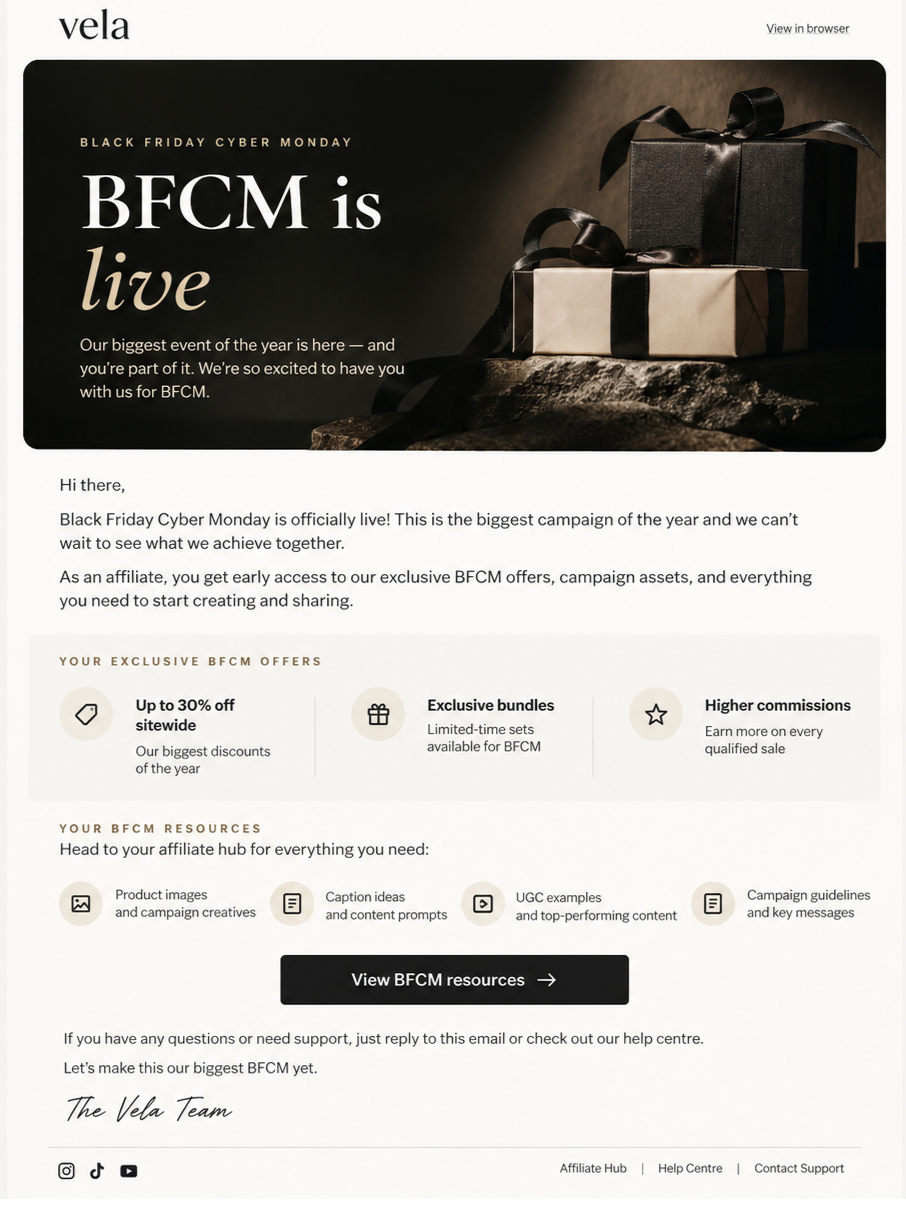
By BFCM week, the setup work should be done. Your focus now shifts to monitoring performance, keeping affiliates engaged, and addressing issues as they come up.
Monitor performance
Review affiliate performance throughout the week rather than waiting until the sale is over. Look at:
- Affiliate revenue
- Referral orders
- Clicks
- Commission
- AOV
- ROI
- Performance by affiliate, program, and platform
Use this data to identify which affiliates are driving results and where additional communication, incentives, or support could help improve performance.
Keep affiliates informed
Keep communication going throughout the campaign. Share leaderboard updates, bonus opportunities, and important offer or campaign updates while affiliates can still act on them.
This gives affiliates a reason to stay engaged throughout BFCM, so that they can use the feedback to continue promoting and improving their approach.
Watch attribution and coupon activity
Higher affiliate activity also means more opportunity for attribution issues and coupon leaks.
Keep an eye on referral and coupon activity throughout the campaign, and audit for suspicious referrers before payouts.
Post-BFCM: Turn campaign performance into your next affiliate strategy
BFCM gives you a concentrated view of how different affiliates, creators, and content perform. Use that data to decide where to invest after the sale instead of treating every affiliate the same.
Look at:
- Which affiliates generated meaningful revenue?
- Which creators produced content worth reusing?
- Which partners are worth sending more products to?
- Which affiliates could move into a higher-value commission tier?
- Which partnerships are worth continuing beyond BFCM?
A creator who generated strong revenue may be ready for a higher commission or a larger partnership. Someone who produced useful content but fewer sales may still be worth keeping in your gifting or UGC pipeline.
Use these results to progress your strongest affiliate relationships and make more specific decisions about where your budget and team effort should go next.
Repurpose your best affiliate content
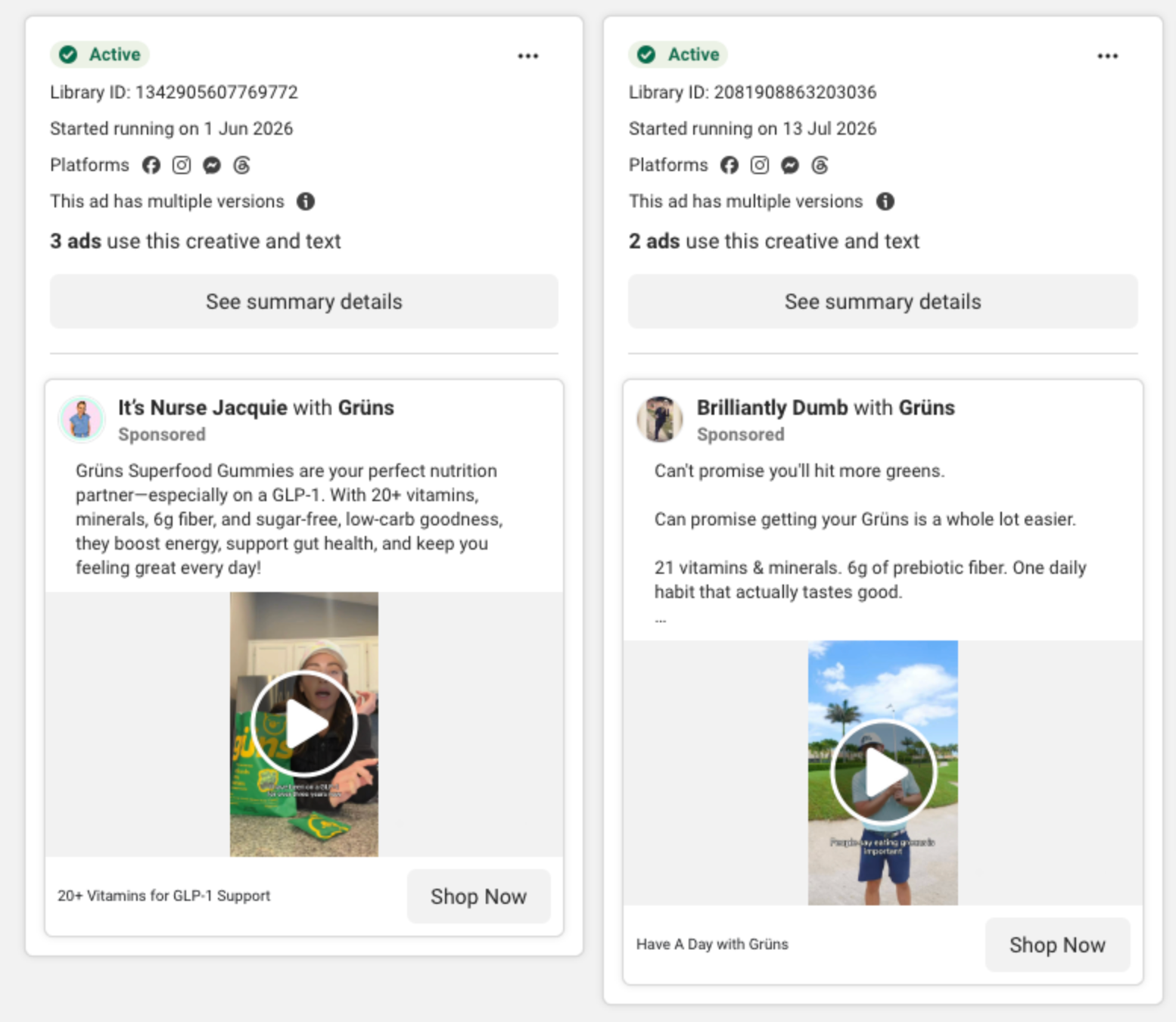
BFCM also gives you a large volume of creator content that can continue working after the sale. Identify the content that performed well and look for opportunities to use it across other parts of your marketing.
- Paid ads: Put spend behind creator content that has demonstrated potential, where you have the appropriate usage rights. You can also run them through Meta Partnership Ads, keeping the creator’s profile attached to the ad.
- Product pages: Add creator reviews, demonstrations, and unboxings at touchpoints where they help shoppers make a purchase decision.
- Email: Use relevant affiliate content in campaign, abandoned-cart, or post-purchase flows.
- Creator-specific landing pages: Extend a creator's recommendation into the shopping experience where relevant. Electro used CreatorCommerce to set up affiliate storefronts featuring content and product recommendations based on what its athletes had shared.
You can then use those results as insights when planning your next round of creator recruitment, content production, and affiliate investment.
Your BFCM affiliate campaign timeline
Here's the full timeline at a glance:
Ready to maximize acquisitions during BFCM?
When you give affiliates enough time to onboard, prepare content, and understand your offers, you’ll be in a much better position to turn that increased activity into revenue.
Social Snowball gives you the infrastructure to manage the program as you scale, from recruiting and onboarding affiliates to setting incentives, managing communications, tracking performance, and handling payouts.