
For many DTC brands, word of mouth drives real demand, but scaling it is harder than it looks. Customers recommend products organically, creators share links informally, and referrals happen off-platform. Without the right system, most of that value goes untracked, unrewarded, and underused.
Divi faced this exact problem. While referrals ranked among the brand’s top acquisition channels, customer-driven revenue stayed below 1% and rising Meta and Google costs made paid scaling increasingly inefficient.
By restructuring how customers and creators were activated, tracked, and rewarded, Divi turned existing community momentum into a measurable growth channel.
Here’s what changed after implementing Social Snowball:
- 4% of total GMV now comes from affiliate-driven sales
- 66.7% lower CAC compared to paid acquisition
- 4× growth in affiliate revenue after replacing legacy platforms
“Social Snowball is a game changer for any brand that’s really looking to activate their community, inclusive of customers and influencers, in a meaningful and business-driving fashion without the headache. There’s just no one else out there doing it quite like they are.”
Lauren Bonfig, Sr. Director Brand Marketing
About the brand
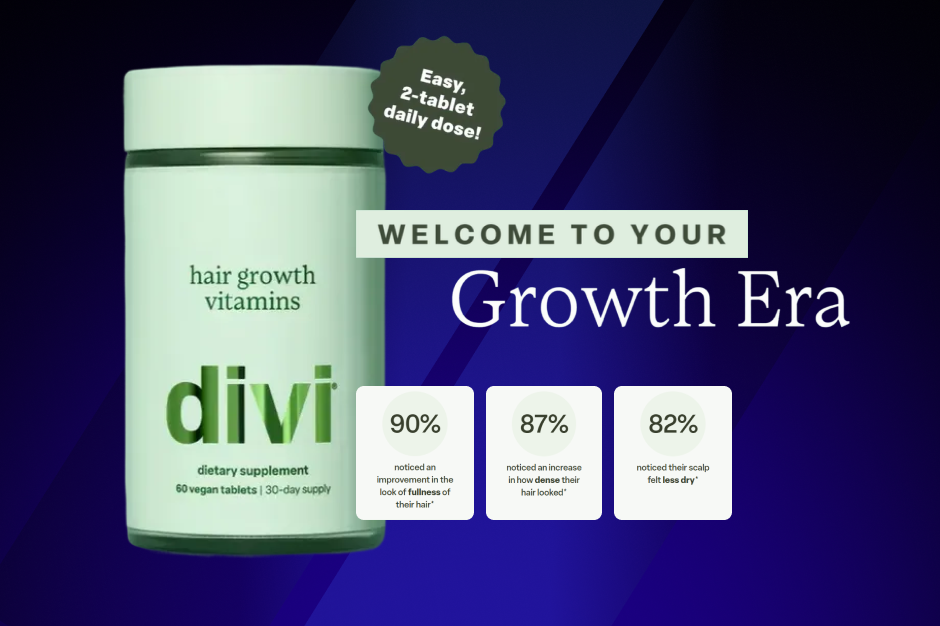
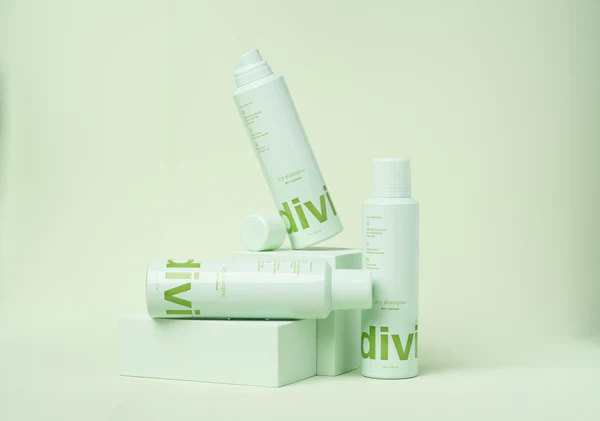
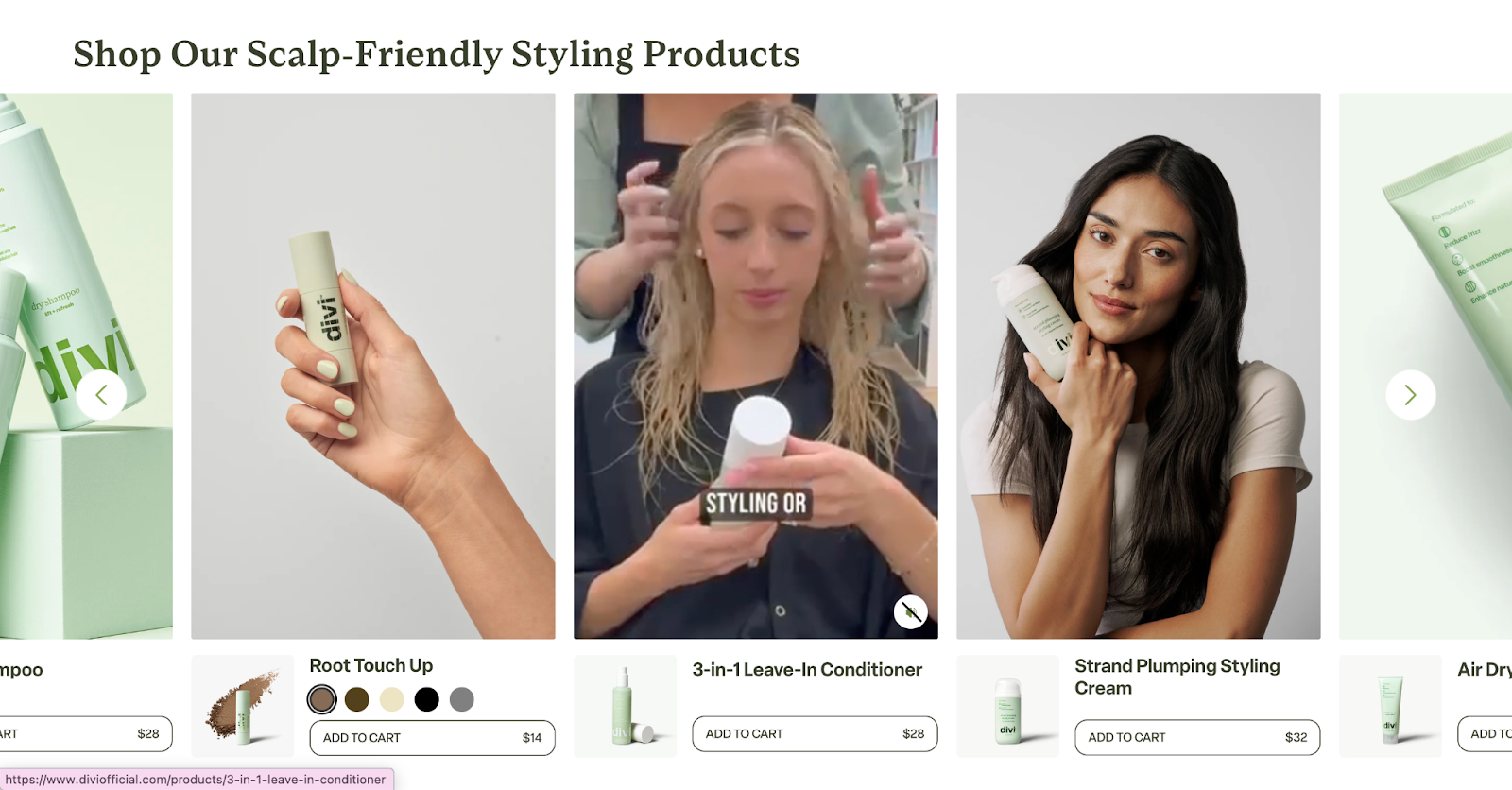
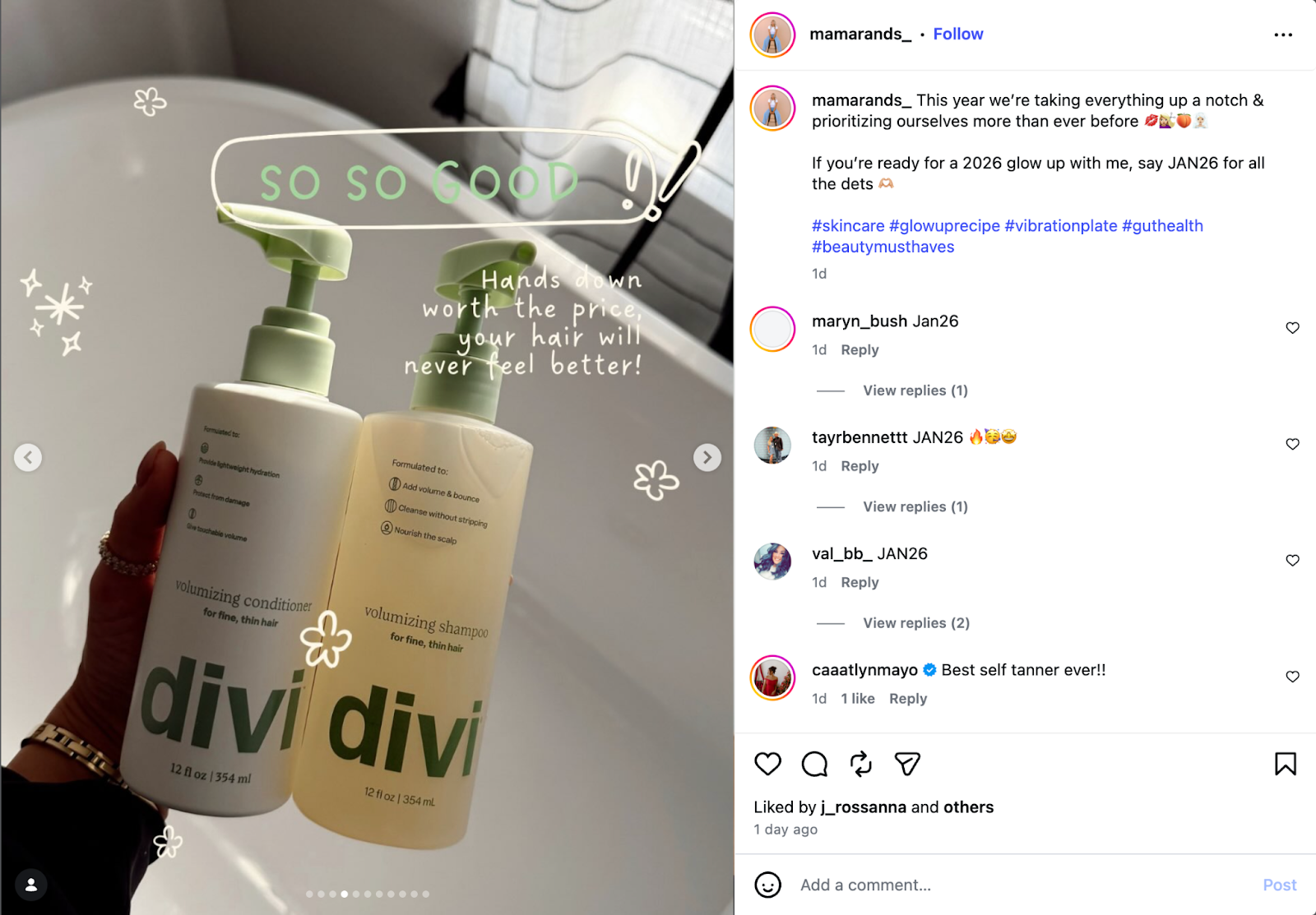
Divi is a hair care brand focused on scalp and hair health, built around clean, scientifically backed formulations. The brand is best known for its hero scalp serum, alongside a growing range of shampoos, conditioners, and treatments designed for long-term hair wellness.
Founded with an emphasis on transparency and real results, Divi positions itself at the intersection of science and everyday hair care. Products are developed to address common scalp concerns while remaining accessible for daily use.
Challenge: Strong word-of-mouth but no way to scale or measure it
Divi wasn’t struggling to get people talking about the brand. The problem was that those conversations weren’t translating into a scalable acquisition channel.
Referrals were happening off-platform
Post-purchase surveys showed that friends and family were one of the top ways new customers discovered Divi. But referrals happened informally; through texts, DMs, and conversations the brand couldn’t track.
Without a system in place:
- Customer referrals drove less than 1% of new customer revenue
- There was no clear way to attribute or reward that behavior
- High-intent demand was effectively invisible
Paid acquisition costs kept rising
Meta and Google were becoming more expensive and less predictable. With a blended CAC of around $42, relying solely on paid ads made scaling harder to justify.
Divi needed a way to acquire customers more efficiently without increasing spend or complexity.
"The increased costs of paid acquisition have been really tough. Meta has always been a sticking point for the brand. This year is not any easier than it has been before."
Existing affiliate tools created friction
Divi had tested traditional affiliate platforms, but they created more problems than they solved.
- Creators struggled to find links and understand attribution
- Payout workflows were clunky and time-consuming
- Managing customers, influencers, and affiliates across multiple tools created operational drag
Instead of unlocking growth, these platforms slowed the team down and limited participation.
“I've been on other platforms where PayPal isn't working, and you have 100 creators being like, 'I'm not paid,' and you're literally calling PayPal themselves trying to figure it out."
No clean way to reward customers and creators together
Divi worked with both customers and influencers, but running those programs separately made it harder to create consistency. There was no single system to onboard both groups easily, offer flexible incentives, and track performance without manual work
"In our post-purchase survey, you can see that more people were buying our product because of a friend or family member telling them about it, than they were due to TikTok or even Google. Friends and family were always in the top three responses in terms of how someone found out about Divi."
Solution: turning informal referrals into a structured acquisition channel
Divi didn’t try to invent a new growth channel. They focused on organizing customers and creators who were recommending the product by building a system around it using Social Snowball.
"We wanted to figure out how we could take what was already happening and what we already saw was an undercurrent and really pour fire on it. And that's kind of where Social Snowball came into the fold."
Step 1: Consolidate customers and influencers into one program
Instead of running referrals, affiliates, and influencers across different tools, Divi brought everything into a single system.
This removed fragmentation and made it possible to:
- Track referrals and affiliate sales in one place
- Onboard customers and creators through the same flow
- Measure performance without stitching together reports
One dashboard replaced multiple platforms and manual work.
Step 2: Activate customers as affiliates automatically
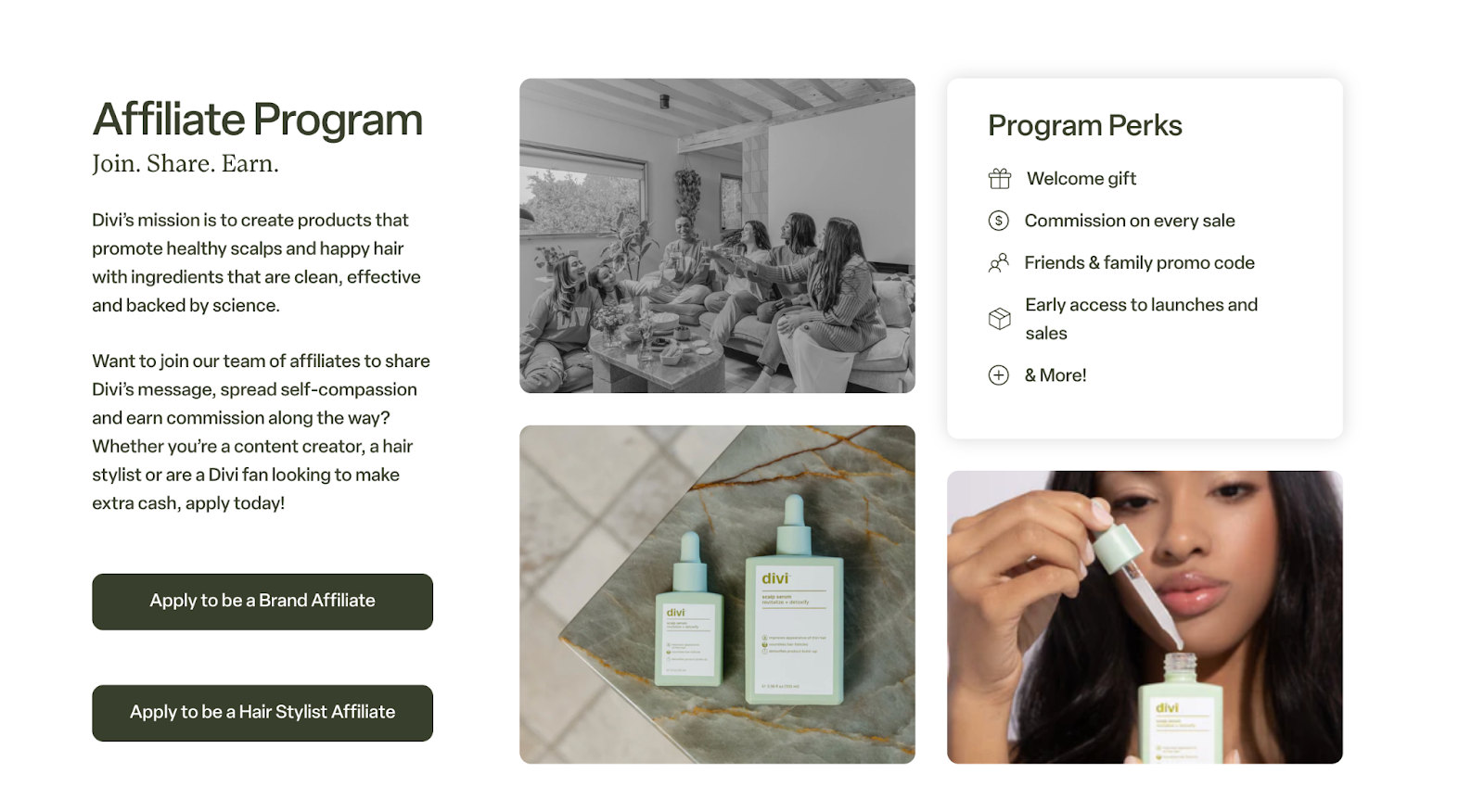
Divi shifted customer referrals from an opt-in, manual process to an automatic one. Every customer could:
- Get a unique referral link or code
- Share it immediately with friends and family
- Earn rewards without extra setup or approvals
This removed friction at the moment when customers were most likely to recommend the product, right after purchase.
"I really liked that there is the ability to put all of our affiliate and influencer efforts into the same system."
Step 3: Introduce tiered incentives to drive repeat sharing
Instead of a single flat reward, Divi created a tiered structure that encouraged ongoing participation:
- $10 cash back (entry tier)
- 15% commission
- 20% commission
Customers could move up based on performance, making referrals feel like a progression rather than a one-time action.
Influencers were set up on a percentage-based commission structure using the same system, keeping incentives consistent across both groups.
"You get the $10 cash back at our base tier, and then you can graduate into the percent commissions. So there's three tiers for customers. There's $10 cash back, 15% commission, and 20% commission is the third tier."
Step 4: Switch rewards from store credit to cash
Divi prioritized cash payouts over store credit. Cash rewards were more motivating which meant that participation increased without extra nudges.
Moreover, payouts felt tangible and immediate. The payout process itself was automated, removing manual calculations and reducing support issues.
"The cash payments are huge. I just think especially for a brand like ours where there's only a limited amount of products and there's only so much shampoo and only so much serum you can use, store credit isn't always the sexiest thing to get someone out of bed."

Step 5: Reduce operational overhead
From an internal standpoint, the system had to be easy to manage. With the new setup:
- Adding a new affiliate took about one minute.
- Creators rarely asked where to find links or stats.
- Payout issues dropped close to zero.
The customer referral program ran continuously without adding ongoing admin work.
"Our onboarding stages and getting to know the team just seems like they’re much more of a white glove service than most other providers where you get integrated, you have help for a little bit, and then it's like you never hear from them."
If you’re not sure where to start with affiliate marketing, read our blog on how you can start an affiliate program for your ecommerce business.
Results: 4% of GMV with a 66.7% lower CAC
Within the first few months of using Social Snowball, Divi turned informal word-of-mouth marketing into a scalable, trackable acquisition channel with clear business impact.
Here’s what the team achieved:
- Affiliate-driven revenue grew from less than 1% to 4% of total GMV.
- The program generated $50,000 in tracked revenue in its early phase.
- Customer acquisition cost dropped to $14.65, compared to $42 from paid ads.
- That’s a 66.7% lower CAC without increasing ad spend.
"Before we started with Social Snowball for referrals, the old school way was driving less than 1% of new customer revenue. And just this past month, we surpassed 4% with Social Snowball."
By automating affiliate activation, tiered rewards, and payouts, Divi was able to scale customer and influencer referrals without adding manual workflows or headcount.
“It takes one minute to add someone to Social Snowball, and we rarely get questions like ‘I’m confused.’”
Divi now runs a community-driven affiliate program that delivers consistent revenue, predictable acquisition costs, and minimal operational overhead built to scale alongside the brand.
Ready to turn word-of-mouth into a scalable growth channel
As referral and affiliate activity expands, the systems behind it matter more. What starts as a simple way to reward customers can quickly turn into scattered tracking, unclear attribution, and manual payout work that’s hard to sustain.
Brands that want to keep word-of-mouth efficient at scale need structure early. Divi is a great example of how putting the right infrastructure in place can turn everyday recommendations into a predictable acquisition channel.
Social Snowball supports this by giving brands a single system to:
- Activate customers and creators as affiliates
- Track referral revenue and acquisition cost clearly
- Handle payouts without manual coordination