
.png)
Brands looking to partner with influencers can find the right creators in two ways. They can source manually through social platforms, a process that’s time-consuming, inconsistent, and difficult to scale. Another option is to use creator marketplaces.
Creator marketplaces centralize discovery, vetting, and outreach, making it easier to find brand-fit creators and scale partnerships without manual effort.
In this guide, you’ll learn what a creator marketplace actually is, how different marketplace models work, when each makes sense, and how to use them effectively for ecommerce growth.
What is a creator marketplace?
A creator marketplace is a platform that helps brands discover, evaluate, and collaborate with creators in a structured way.
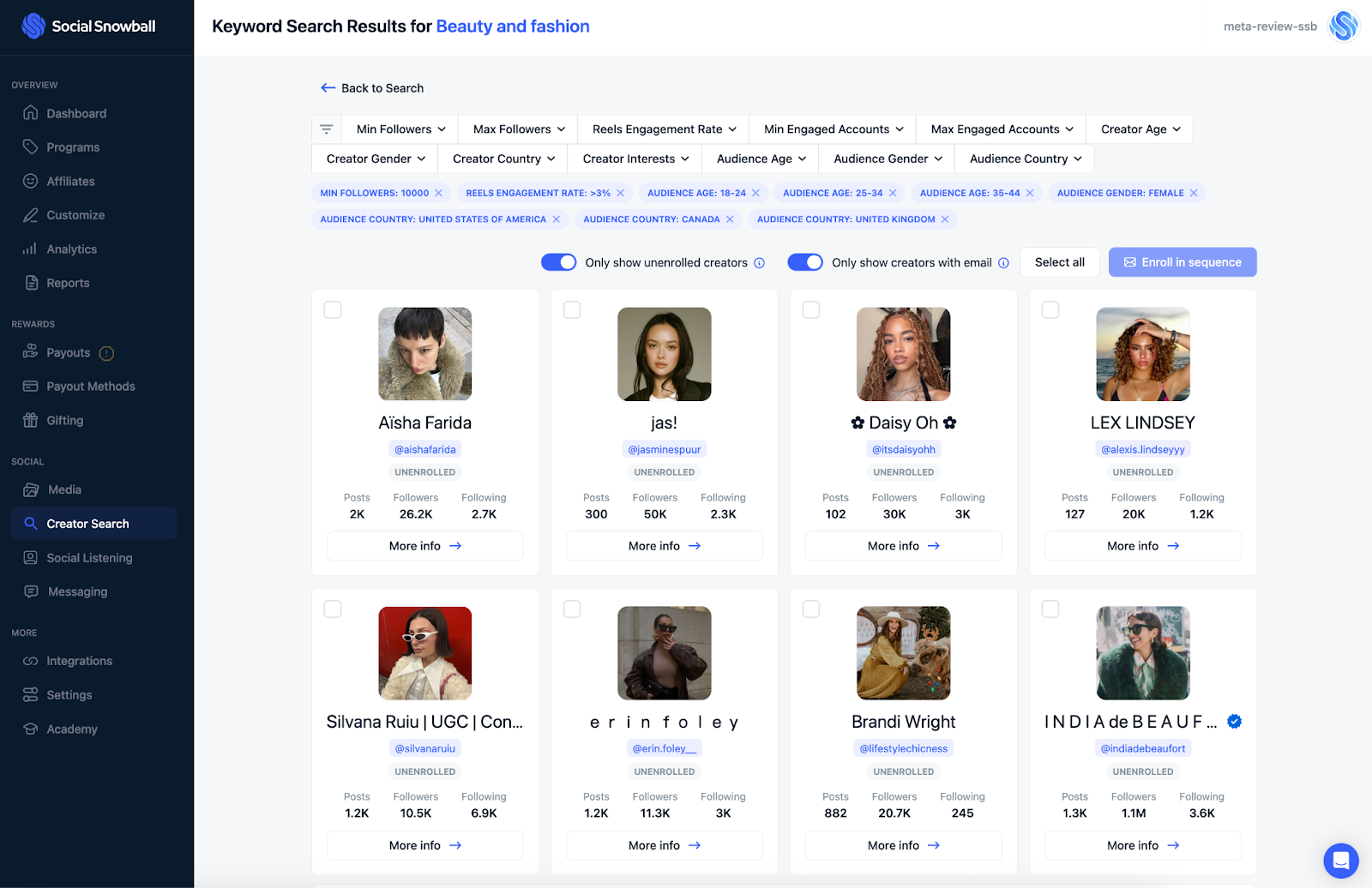
Instead of manually searching social platforms, opening dozens of tabs, and managing outreach in spreadsheets, creator marketplaces centralize the entire sourcing workflow. Brands can browse creator profiles, filter by audience and branded content signals, review past brand collaborations, and reach out, all from one place.
Most creator marketplaces support some combination of:
- Creator discovery based on niche, audience, content style, or performance signals
- Vetting and evaluation, including audience demographics and past partnerships
- Outreach and recruiting, often with built-in messaging or email tools
- Campaign or relationship management, such as approvals, briefs, and tracking
For ecommerce brands, creator marketplaces are useful because they reduce the time and effort required to find relevant creators and make the sourcing process repeatable, especially when scaling influencer marketing, affiliate, or UGC programs.
Common marketplace models
Most creator marketplaces follow one of three models:
- Open marketplaces: Content creators can join easily. You get volume and faster testing, but you carry more responsibility for vetting and quality control.
- Curated marketplaces: Creators are reviewed before joining. You see fewer profiles, but they’re more aligned with your target audience and content needs.
- Invite-only networks: Access is restricted. These are built for deeper creator partnerships, consistent output, and higher standards on both sides.
How it differs from agencies and manual sourcing
Creator marketplaces sit between manual sourcing and agencies, offering speed and scale without giving up control.
Manual sourcing is slow, inconsistent, and hard to scale. You’re scrolling platforms, opening tabs, and tracking creators in spreadsheets. Creator marketplaces centralize discovery, filters, and data, helping you find and evaluate creators quickly and repeatably.
Agencies take full ownership of sourcing for you, but they’re expensive and limit visibility. Creator marketplaces keep discovery in-house, give you direct access to creator data and performance, and let you test, iterate, and build long-term partnerships without agency fees.
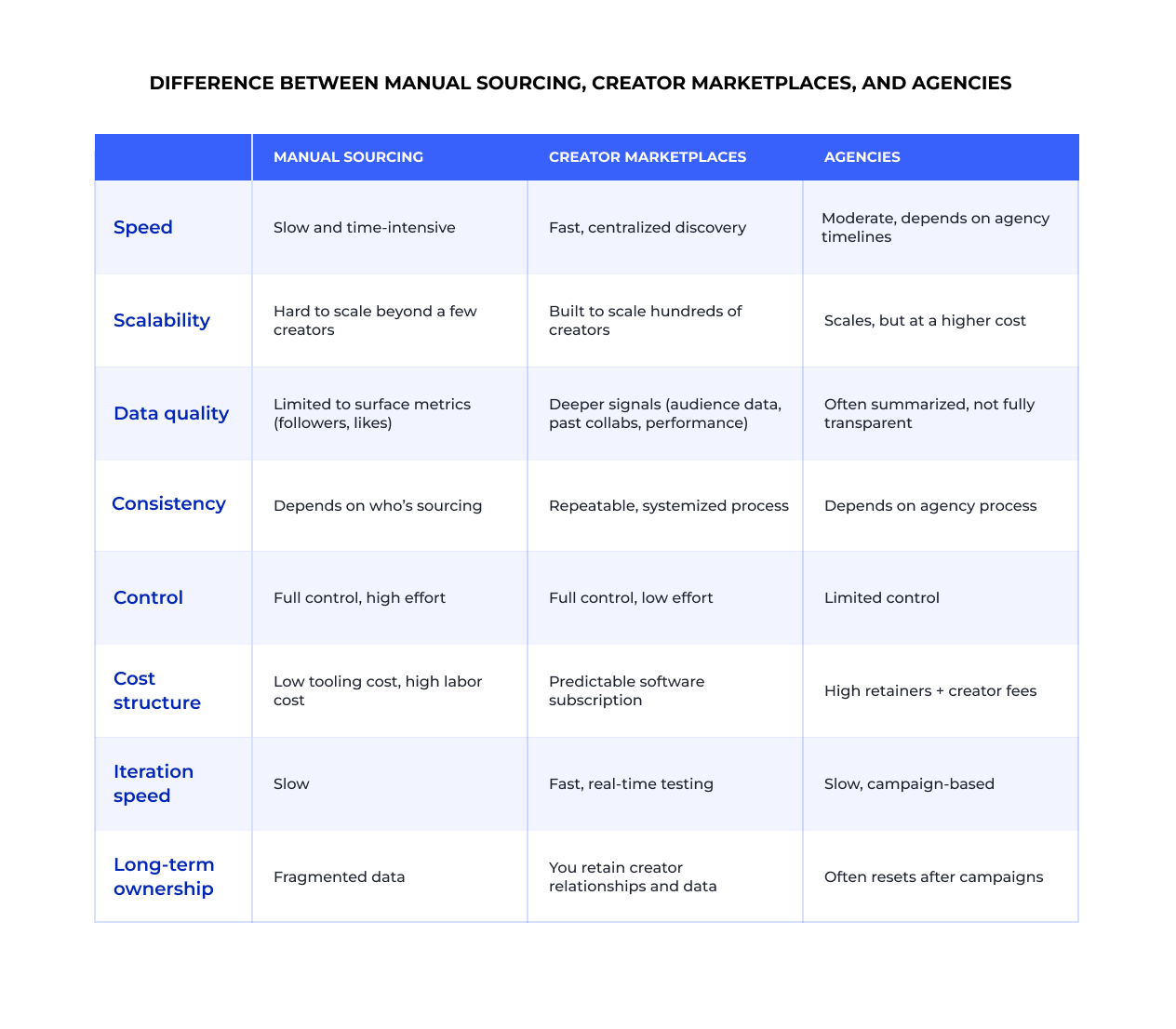
Here’s when each type of sourcing makes sense:
- Manual sourcing works for early-stage brands testing a few creators.
- Agencies make sense when brands want full outsourcing and minimal internal involvement.
- Creator marketplaces are best when you want speed, control, scalability, and the ability to build a long-term creator engine in-house.
How creator marketplaces work for brands
Creator marketplaces turn creator work into a repeatable system. Instead of scattered outreach and ad-hoc decisions, brands move through a clear sequence that keeps sourcing, activation, and scale aligned.
Here’s a step-by-step on how creator marketplaces work for your brand:
- Define the creator criteria: Brands start by defining goals and requirements. This includes the primary platform, the content formats that support the customer acquisition journey, and the audience profile that matters. Clear criteria reduce noise and prevent wasted outreach.
- Discover and shortlist creators: Marketplaces surface creators who already operate in the right niche. Brands review creator portfolio, content quality, posting consistency, and audience alignment from one view, making shortlisting faster and more deliberate.
- Evaluate for repeatability: Shortlisted creators are assessed for more than surface appeal. Brands look for signals that suggest the creator can produce consistent, usable content over time rather than a single post.
- Align and activate: Once aligned, brands set expectations around content, timelines, and usage. Creators publish in agreed formats, and brands decide how that content fits into organic distribution or paid placement.
- Monitor early performance: As content goes live, marketplaces centralize early performance metrics. Brands quickly see which creators and formats resonate and which ones stall.
- Scale what works: Creators who perform move into ongoing relationships. Their content is reused, sourcing criteria tighten, and the process repeats with better inputs each cycle.
Types of creator marketplaces that ecommerce brands use
Once you understand how creator marketplaces work, the next challenge is choosing the right model. Not all marketplaces are built for the same outcome. Each one shapes how you source creators, how much data you can see, and whether creators become one-off posts or long-term revenue partners.
The real differences come down to three things: where creator data comes from (first-party vs. third-party), how deeply you can evaluate performance and buyer intent, and whether the platform supports activation and ongoing partnerships after the initial match.
If these don’t align with how you want creators to drive growth, friction shows up fast through wasted spend, stalled campaigns, or partnerships that never scale.
There are 3 types of marketplaces:
Platform-native marketplaces
Ideal for: Brands prioritizing fast distribution within a single platform
Platform-native marketplaces are built into social media platforms themselves. Discovery, approvals, and paid distribution all happen within the same ecosystem. Brands source creators from the platform’s database, evaluate platform-specific signals, and activate content using native tools.
This model works best when speed and distribution matter more than long-term relationship building. It’s especially effective for creator-led ads, where content needs to move quickly from approval to amplification.
- TikTok Creator Marketplace: Source creators who already perform in your category on TikTok. You can review posting frequency, audience demographics, content style, and historical engagement rate before outreach, which makes early testing faster and more deliberate.
- YouTube BrandConnect: It’s suited for products that need explanation, credibility, or longer-form storytelling. Creators can naturally integrate brands into existing video formats rather than producing short-term promotional clips.
- Instagram & Facebook creator tools (via Meta Platforms): Meta’s creator tools are ideal when paid distribution is central to your strategy. These tools connect directly to Instagram’s Creator Marketplace, Meta Business Suite, and Ads Manager, making partnership ads easy to approve, launch, and scale.
Best for:
- Brands that prioritize fast distribution within a single social platform.
- Teams running creator-led ads and needing seamless approval flows.
- Campaigns where speed and platform compliance matter more than relationship depth.
Limitations:
- Limited visibility into long-term creator performance.
- Weak support for cross-platform programs.
- Creator relationships remain shallow and hard to compound
Affiliate and performance-based marketplaces
Ideal for: Brands optimizing for revenue ownership and repeat performance
Performance-based marketplaces tie creators directly to outcomes. Instead of measuring success by reach or content volume, these platforms focus on sales, attribution, and repeat impact through affiliate links, discount codes, and commissions.
Brands can track key performance metrics (KPIs) like sales and repeat orders in real-time, then scale relationships that actually perform.
This model is built for brands that want creators to behave like a scalable acquisition channel, not a one-off campaign input.
Some examples of affiliate and performance-based creator marketplaces are:
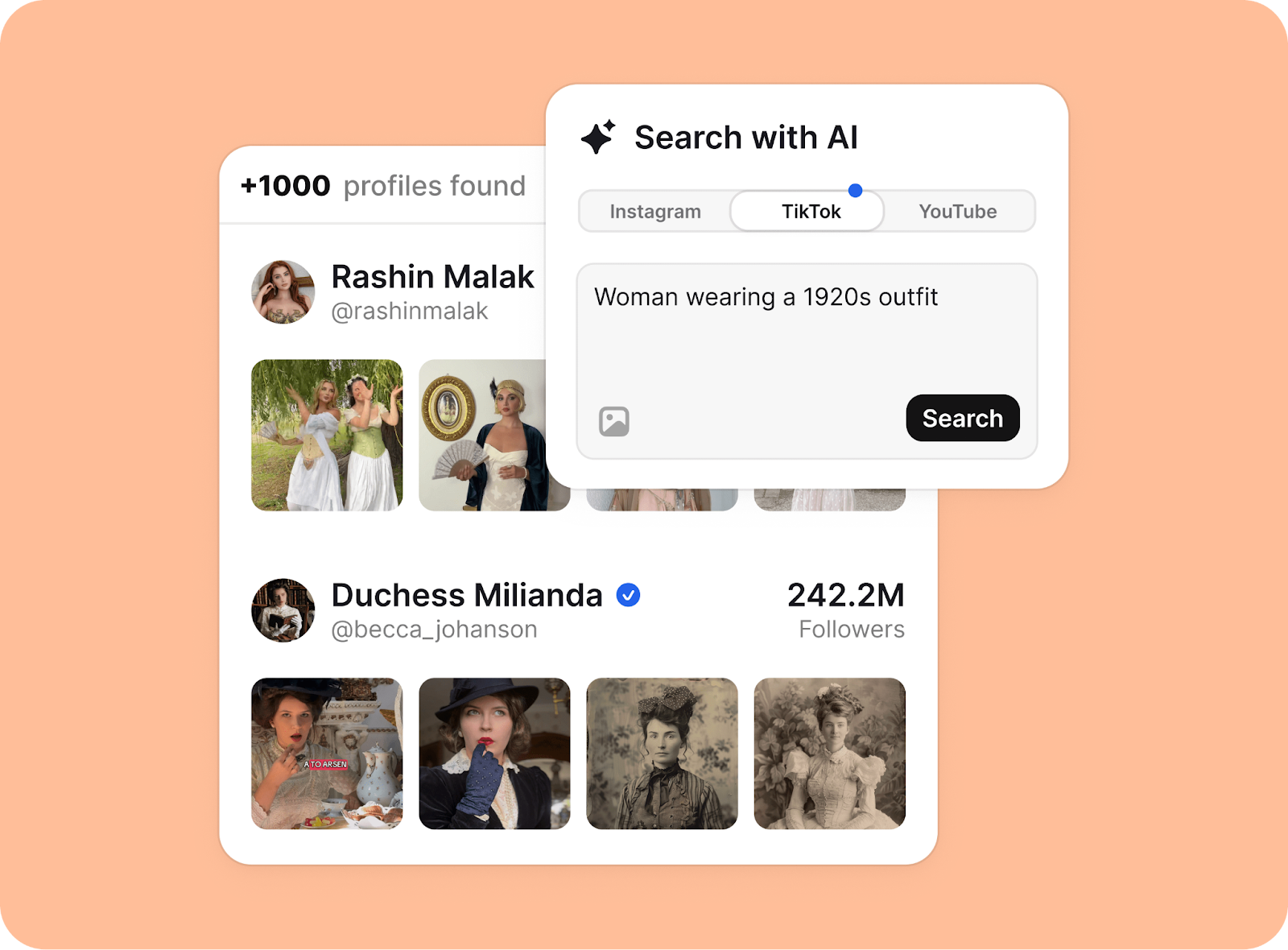
- Upfluence combines large-scale creator discovery with CRM-style relationship management. It maintains a broad creator database across platforms, supports outreach and follow-ups, and centralises tracking.
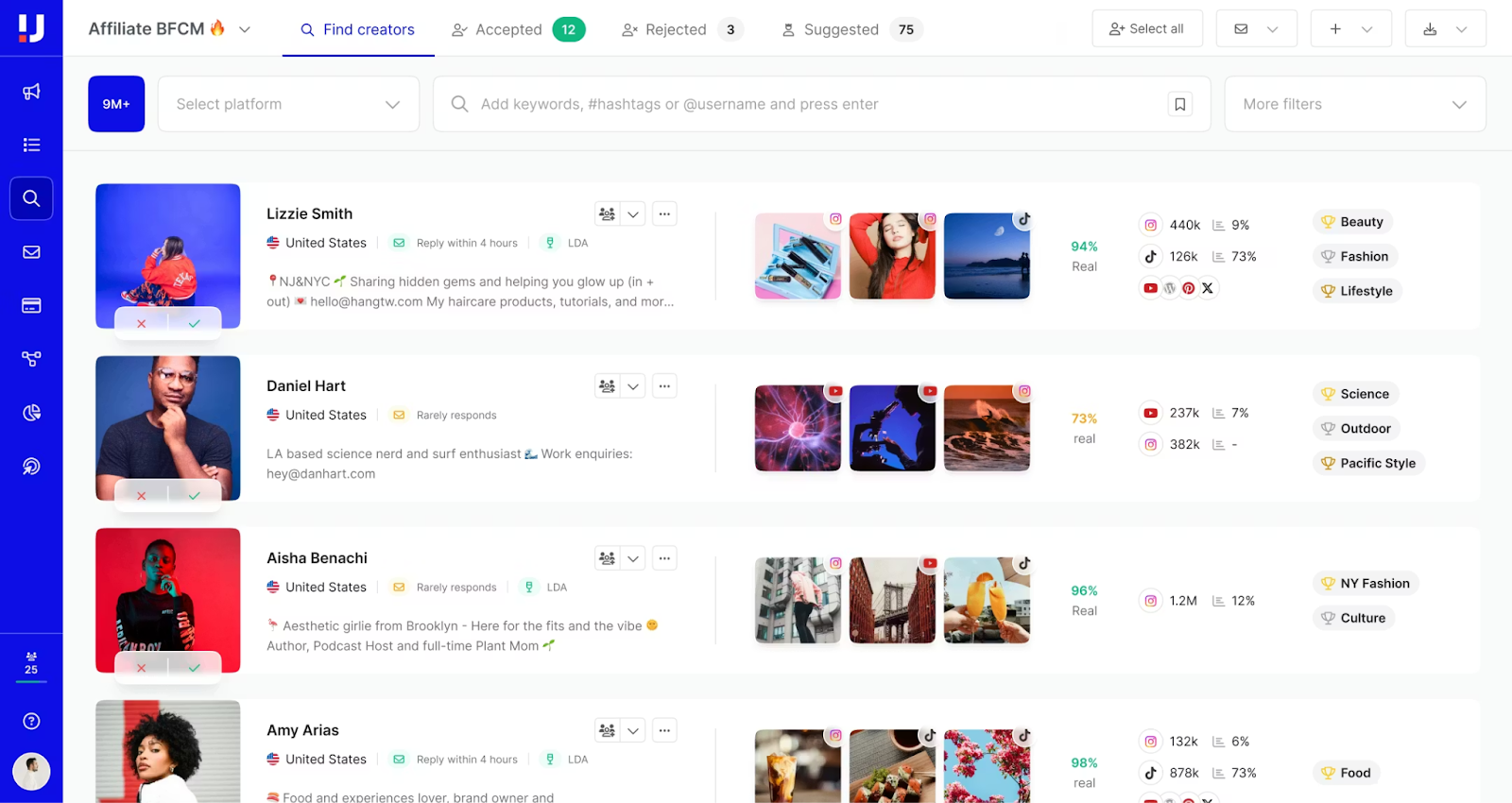
- GRIN functions as an end-to-end creator operations system. It manages contracts, payments, approvals, and creator communication while maintaining long-term relationship history.
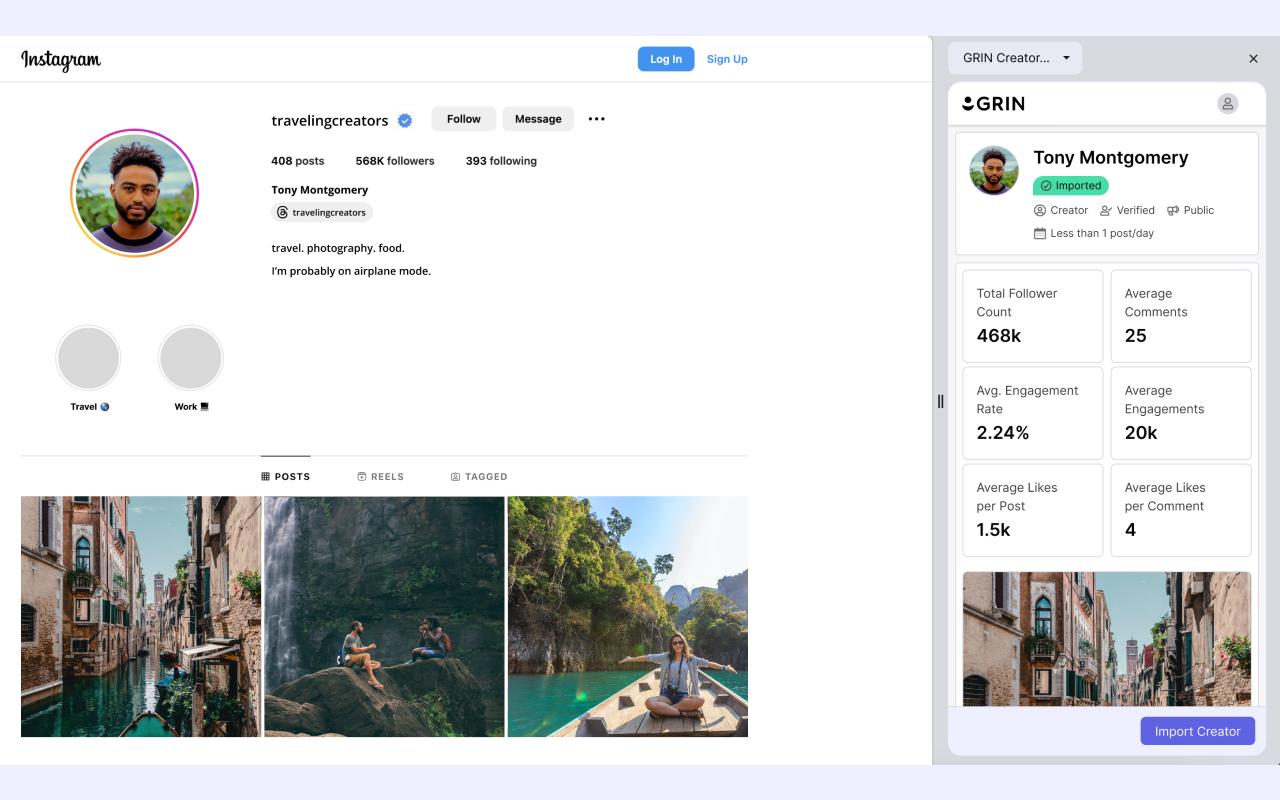
- Modash specialises in creator discovery and vetting. It surfaces creators based on audience demographics, engagement quality, and content patterns, helping teams assess fit before any outreach begins.
Best for:
- Brands that want creators accountable to sales, and not just content output.
- Teams focused on repeat performance and measurable outcomes.
- Programs designed to scale creator partnerships over time.
Limitations:
- Requires clear internal ownership and process discipline.
- Vetting and onboarding quality directly impact results.
- Overkill for short-term or one-off creator campaigns.
UGC & content-first marketplaces
Ideal for: Brands solving content and creative supply needs.
UGC-first marketplaces focus on content production, not creator relationships. Brands submit briefs, creators deliver assets, and performance usually stops at content handoff.
These platforms help brands maintain a steady flow of UGC for ads, landing pages, and product detail pages.
Some examples of UGC & content-first marketplaces are:
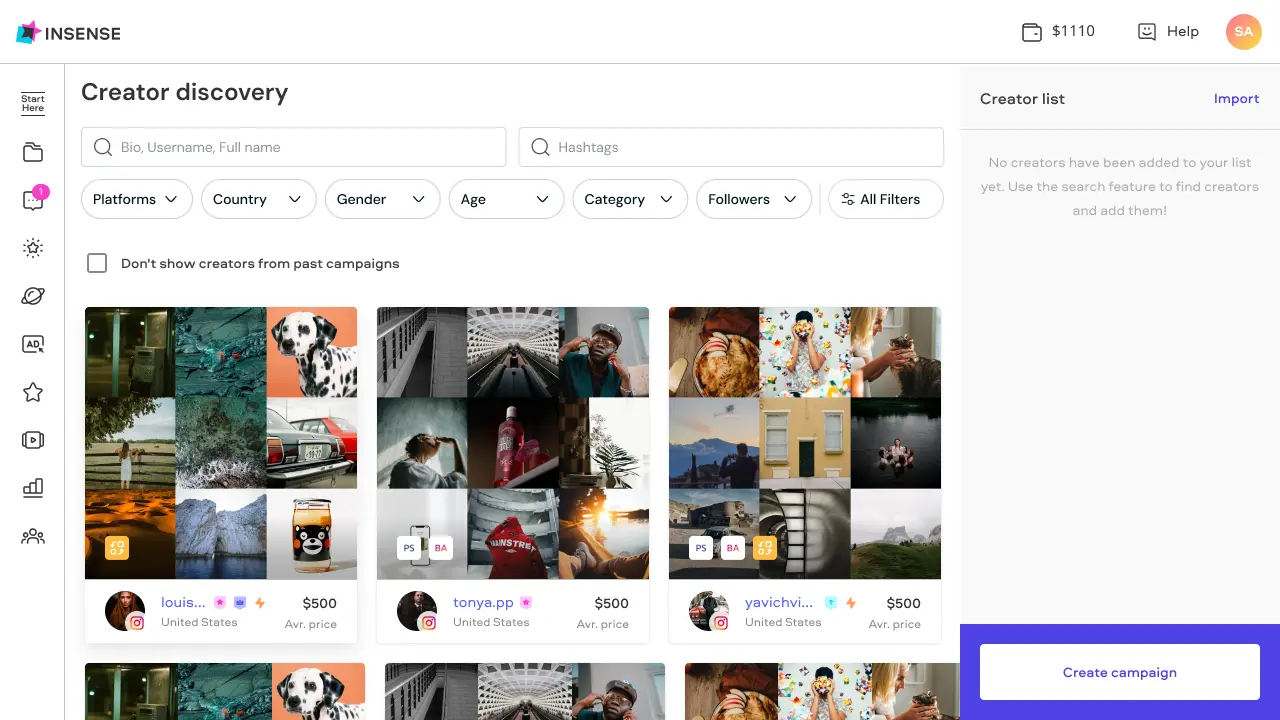
- Insense is a UGC production marketplace that connects brands with creators who create content based on defined briefs. The platform helps brands manage submissions and receive ready-to-use assets.
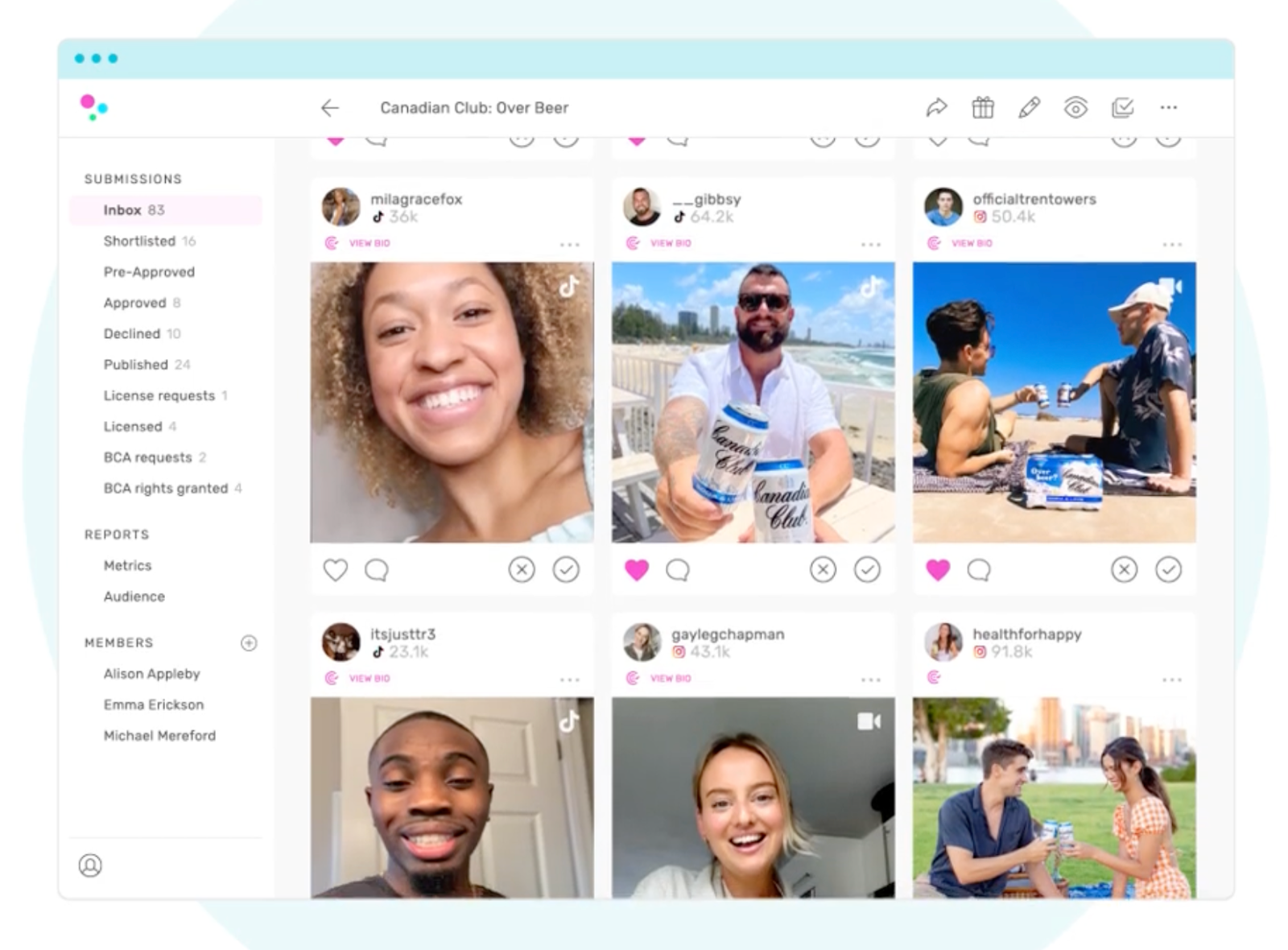
- TRIBE: TRIBE runs on a pitch-based content model. Creators submit ideas in response to campaign briefs, and brands approve concepts before production begins. This upfront alignment improves creative fit and works best for campaign-driven content where clarity and control matter more than ongoing creator relationships.
Best for:
- Brands that already know which formats convert.
- Teams needing consistent UGC volume for ads and landing pages.
- Creative testing and content refresh cycles.
Limitations:
- Creator relationships stay transactional.
- Performance tracking usually stops at content delivery.
- Weak connection between creators and revenue outcomes.
Operating models
Besides the type of marketplace, the more important decision that brands need to make is who actually runs the creator program.
Creator marketplaces typically fall into one of two operating models: managed or self-serve.
Managed platforms
Managed platforms handle execution on your behalf. Sourcing, outreach, coordination, and sometimes even content approvals and payments are run by the platform or an external team. Your role is primarily to approve direction and review results.
Important note: Not all creator marketplaces offer a managed option. Many platforms are strictly self-serve, meaning brands must run sourcing and activation internally or pair the tool with an agency if they want to outsource management.
Best fit for:
- Small or lean teams with limited bandwidth
- One-off or high-touch campaigns
- Brands prioritizing convenience over experimentation
Tradeoffs to consider:
- Limited transparency into creator data and decision-making
- Slower feedback loops and iteration
- Creator relationships often reset after each campaign
- Hard to turn creator programs into a repeatable, performance-driven channel
Managed models reduce workload, but they also reduce learning and long-term leverage.
Self-serve platforms
Self-serve platforms give your team the tools to run creator programs internally. You control sourcing, vetting, outreach, activation, and performance tracking, while the platform removes manual work through automation and structured workflows.
Best fit for:
- Brands treating creators as a core growth channel
- Teams focused on performance, attribution, and scalability
- Programs designed to compound over time through repeat partnerships
Tradeoffs to consider:
- Requires clear internal ownership and process discipline
- Results depend on how well sourcing and onboarding are executed
- Less suitable if you want a completely hands-off approach
Self-serve models keep data, learnings, and relationships inside your business, making it easier to improve outcomes with every cycle.
How to choose the right creator marketplace for your brand
Once you understand how creator marketplaces work and the different models available, the decision comes down to fit. The right marketplace supports how you want creators to drive growth today and continues to adapt as volume increases.
Here is a step-by-step guide on how to choose the right creator marketplace for your brand:
1. Start with your primary goal
Before comparing platforms, get clear on what you want creators to deliver for the business. This decision sets the direction for every other choice. Some examples of the goals you can set are:
- If you need speed to launch, platform-native marketplaces are best for fast creator activation and immediate distribution within one platform.
- If you want long-term scale and repeat output, affiliate & performance-based marketplaces are built for programs that improve over time without adding manual work.
- If your bottleneck is creative supply, UGC & content-first marketplaces are designed to deliver content volume against defined briefs.
- If you’re optimizing for lower CAC or revenue performance, affiliate & performance-based marketplaces tie creator activity directly to outcomes like sales and repeat orders.
- If brand storytelling or education matters most, platform-native or UGC-first marketplaces are useful when influence happens over time rather than through direct conversion.
2. Decide the type of creator relationships you want
Different marketplace types support different depths of partnership.
- One-off posts or UGC production: UGC & content-first marketplaces are best when output matters more than ongoing collaboration.
- Performance-based affiliates: Affiliate & performance-based marketplaces are built for creators who post repeatedly and are accountable for results.
- Long-term creator partners or ambassadors: Affiliate & performance-based marketplaces retain performance history and compound results over time.
Misalignment here is what causes churn, stalled programs, and wasted product.
3. Evaluate creator quality, not just volume
A large creator database only helps if you can narrow it down quickly.
- Platform-native marketplaces: Show platform-specific metrics (followers, posting frequency, demographics), but limited cross-platform context.
- UGC & content-first marketplaces: Focus on content delivery capability, not buyer influence.
- Affiliate & performance-based marketplaces: Prioritize niche relevance, audience behavior, and historical performance signals.
4. Assess audience and performance visibility
Optimisation depends on what you can see before and after creators go live. Visibility reduces guesswork and speeds up decision-making.
- Platform-native marketplaces have strong visibility into platform metrics, weaker insight into downstream revenue.
- In UGC marketplaces, visibility usually stops at content delivery.
- Affiliate & performance-based marketplaces offer the clearest view into conversions, repeat purchases, and revenue impact.
If revenue performance matters, you need visibility beyond views and likes.
5. Understand how creators are activated post-sourcing
Finding creators solves only the first problem. What happens next determines whether the program gains momentum or stalls.
- Platform-native marketplaces: Activation is fast but often limited to single campaigns.
- UGC marketplaces: Activation ends once content is delivered.
- Affiliate & performance-based marketplaces: Support repeat posting, ongoing incentives, and long-term activation paths.
6. Review tracking, attribution, and payouts
When activation and tracking work together, creator programs stay predictable and scalable instead of resetting every campaign. This step decides whether the program becomes measurable or chaotic.
Here’s how the different marketplaces function:
- Platform-native marketplaces: Attribution is limited to platform activity.
- UGC marketplaces: Rarely include attribution or payouts tied to performance.
- Affiliate & performance-based marketplaces: Built around link- or code-based attribution, commissions, and automated payouts.
7. Compare pricing and hidden costs
Marketplace pricing directly impacts your true customer acquisition cost, so look beyond the headline price and evaluate how costs add up once creators are active:
- Understand how pricing is structured: Check whether the platform charges a flat subscription, usage-based fees, or a mix of both. Subscription models stay predictable at low volume but can become inefficient if you only run occasional programs. Usage-based pricing scales with activity and needs closer monitoring.
- Separate platform fees from creator payouts: Some marketplaces charge platform fees on top of what you pay creators. Factor both into your cost calculations so that creator output doesn’t look cheaper than it actually is.
- Test how costs scale with volume and performance: Model what pricing looks like when you manage more creators or scale campaigns. Fees that rise with creator count, outreach volume, or revenue can quietly inflate CAC as programs grow.
Here’s how the 3 marketplaces typically price:
- Platform-native marketplaces: Often low entry cost, but performance is limited to a single channel.
- UGC marketplaces: Pricing scales with content volume, not outcomes.
- Affiliate & performance-based marketplaces: Costs scale with activity and performance, requiring closer monitoring but delivering clearer ROI.
Always separate platform fees from creator payouts to understand true CAC.
8. Pressure-test for scalability
Before you commit, stress-test the model at real volume. Ask one final question: Will this still work when you’re managing 100 creators at the same time?
- Track how operational effort grows: Monitor how much manual work increases as creator count rises. If adding creators means adding people or processes, the system will cap growth.
- Identify dependence on manual steps: Check whether sourcing, outreach, approvals, or tracking rely on spreadsheets, inboxes, or one-off fixes. Manual steps compound quickly and become failure points at scale.
- Check integration with your ecommerce stack: Confirm the marketplace connects cleanly with your ecommerce platform and lifecycle tools. Strong integrations keep attribution accurate and reduce handoffs as volume grows.
How to use creator marketplaces effectively
Once you’ve chosen the right type of creator marketplace, results come down to execution. The platform gives you access; your process determines outcomes. Teams that win treat marketplaces as systems, not search tools.
Here are some ways to use creator marketplaces effectively:
- Decide upfront what a strong creator looks like: Define the platform, content format, audience context, and buying trigger that the creator should influence. Clear criteria remove ambiguity and turn discovery into a focused search.
- Filter creators based on buying intent: Evaluate how a creator’s audience behaves, not how large it is. Prioritize profiles where comments show product questions, comparisons, routine adoption, or purchase consideration. This keeps your focus grounded in intent.
- Run controlled creator tests: Onboard creators in small, deliberate batches. Each batch should test a specific hypothesis (format, message, or audience type), so results stay readable, and decisions stay grounded in clear insight.
- Convert winners into long-term programs: Move creators who perform into ongoing partnerships. Reuse their content, expand distribution, and refine creator criteria using real performance data. This closes the loop and turns short tests into a system that compounds.
Ready to pick the right creators for your brand?
Finding creators is only the starting point. To scale results, you also need a system that helps you manage the relationship, track performance, and turn high-performing creators into repeat partners instead of one-off experiments.
This is where Social Snowball fits naturally. It brings creator discovery, vetting, outreach, affiliate activation, and performance tracking into a single workflow. Instead of juggling tools or rebuilding processes for every campaign, you get a clear system to identify high-intent creators, activate them quickly, and scale what drives revenue.
.webp)


