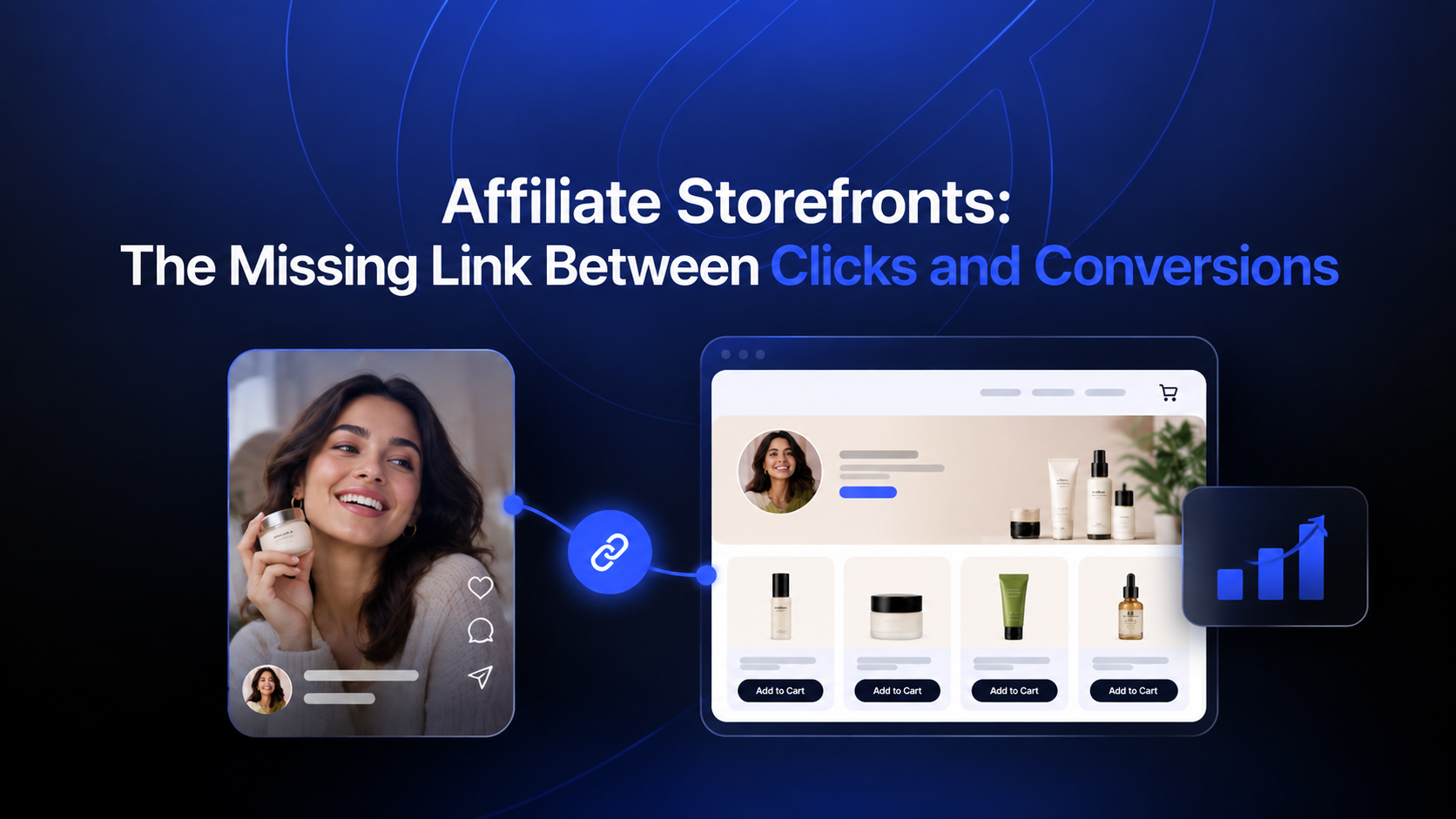

Affiliate marketing is one of the most efficient acquisition channels for ecommerce. When it’s set up right, it drives high-intent traffic, brings in new shoppers, and lowers your cost to acquire customers.
But the difference comes down to sourcing. While there are many easy ways to find affiliates, not all of them drive results. Without a clear approach, teams end up with coupon sites, low-intent partners, or programs that look busy but don’t move revenue.
We’ve listed 6 ways you can find affiliates for your brand, along with how to prepare your program and evaluate who is worth activating.
Before you start looking for affiliates for your word-of-mouth program
Affiliate sourcing works best when it’s intentional. If you start recruiting without clear guardrails, you’ll end up with the wrong affiliate partners, messy workflows, and a program that’s hard to scale.
Define the type and criteria for your affiliate
Affiliate quality determines how your program performs, the conversions it drives, and how much manual work the program requires.
There are five common types of affiliates you can consider:
- Existing customers
- Content creators and influencers
- UGC creators
- Publishers and review sites
- Niche experts
Before recruiting, define what a good affiliate looks like for your brand. At a minimum, clarify:
- Which platforms you want to recruit from (TikTok, Instagram, blogs, YouTube, etc.)
- The type of content and formats your affiliates should create
- Their existing audience type and how closely it matches your target audience
- How frequently you expect them to promote
- Whether success is measured by reach, sales, or both
Design your programs
Not every brand needs the same setup. Some run only a customer referral program, while others also have creator partnerships. More mature brands add in platform-specific programs (like TikTok Shop affiliates or creator whitelisting).
Decide which structures make sense for your business:
- Customer referrals
- Creator or influencer affiliates
- Platform-specific affiliates (TikTok, Instagram)
- Tiered or performance-based programs
Your program design should reflect how you expect affiliates to drive value, not just how many you recruit.
Set up the workflow to operationalize your programs
Before you start recruiting, your workflows need to be in place. When affiliates join, they should be able to activate immediately without manual setup or follow-ups.
Here’s what you need to define:
- How unique affiliate links or codes are issued
- Commission rates and structure
- Email flows for onboarding and ongoing communication
- How performance is tracked
- How and when payouts happen
When workflows are clear, activation is fast. When they aren’t, programs stall before they scale.
Most brands use tools like Social Snowball to manage and automate affiliate partnerships, so that sourcing, activation, and payouts all run from one system instead of scattered tools.
Where to find affiliate marketers
Pro tip: If you’re just starting, begin with customers and creators who already mention your brand. Warm sourcing always outperforms cold outreach.
Below are the most effective ways that ecommerce brands find high-quality affiliates.
1. Reach out to existing customers for referrals
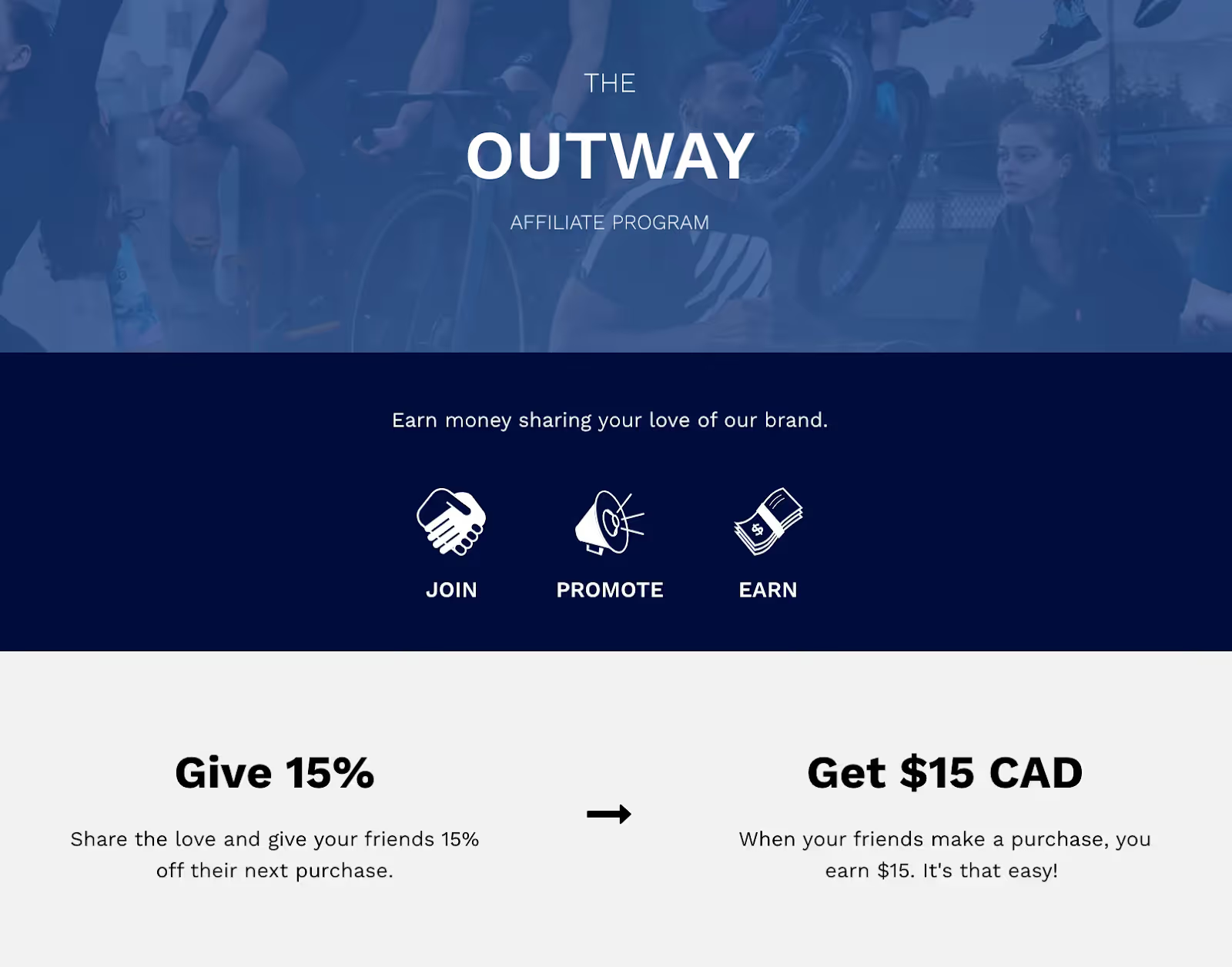
Your best affiliates often already buy from you. Focus on customers who purchase repeatedly, leave reviews, or share your products organically. They already trust your brand and are more likely to recommend it to new customers, especially when given a clear incentive to do so.
Customer referral programs are one of the easiest and most effective ways to drive word-of-mouth growth:
- Easy onboarding: These customers already trust your brand and need little convincing to participate.
- High trust: Recommendations from friends and family convert better than any other channel.
- Lower CAC: Referred customers generate $3.62 in revenue per visit and tend to stay with the brand longer than customers acquired through paid ads.
Social Snowball automatically converts customers into affiliates, assigns unique links or codes, and emails them instructions, turning satisfied buyers into revenue-driving partners without manual work.
2. Find influencers and creators on social media and search engines
Consumers these days are increasingly relying on creators to make buying decisions. Partnering with the right creators allows you to tap into this influence and show up at the exact moment customers are evaluating a purchase.
You can find influencers to promote your brand in a few ways:
- Search niche keywords on TikTok, Instagram, YouTube, or even on forums.
- Identify topical authorities in your category.
- Look for UGC creators creating routine or use-case content.
- Track micro-influencers who already tag your brand on social media platforms.
- Explore creator marketplaces like TikTok Creator Marketplace.
When evaluating influencers, go beyond follower count. Look at engagement quality, audience relevance, and past brand partnerships to determine whether they can actually drive conversions.
Want to turn these creators into long-term partners? Read our guide to successful influencer outreach.
3. Use creator discovery tools
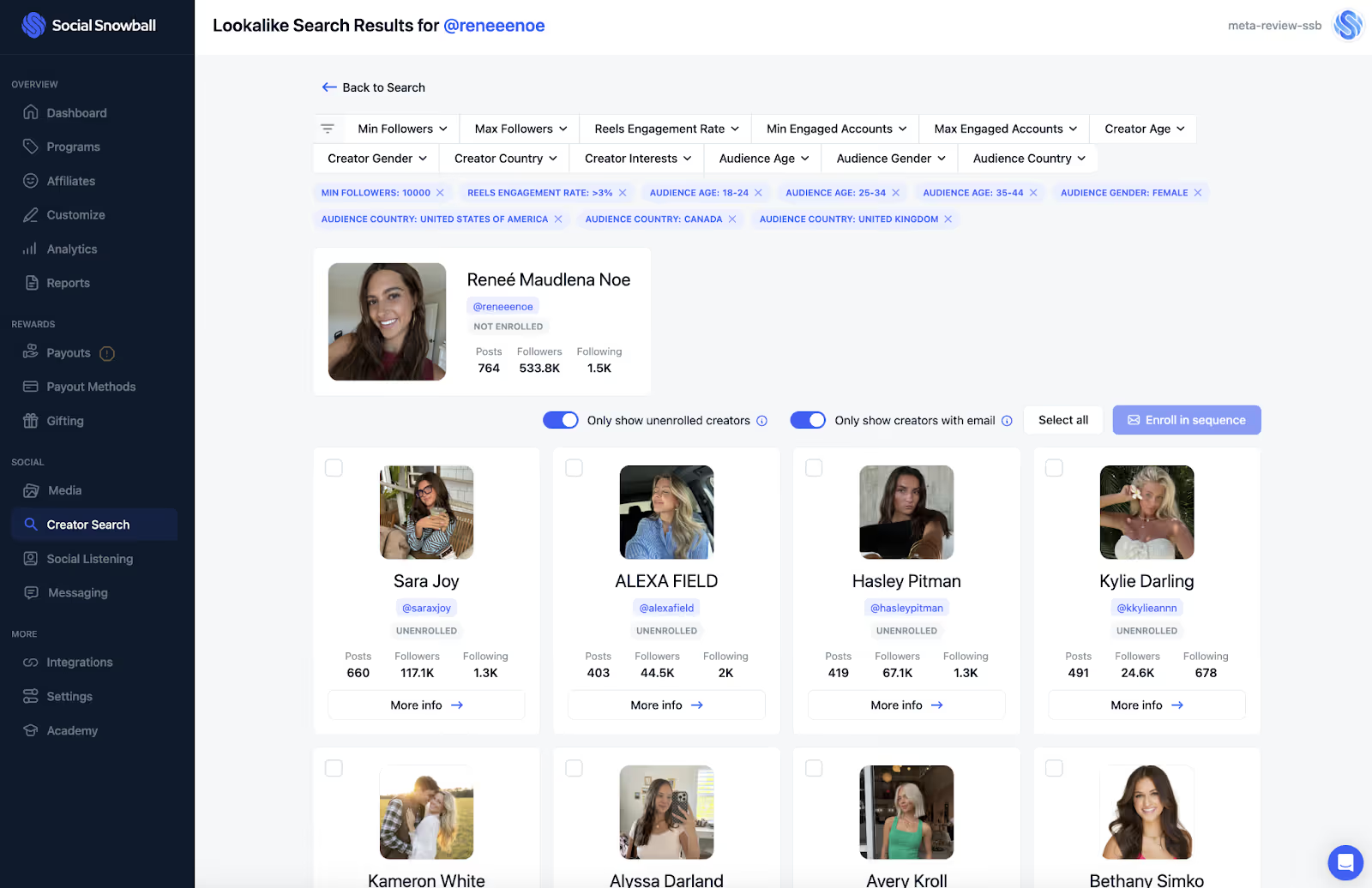
Creator discovery tools replace manual searching with structured sourcing. Instead of scrolling profiles, you can find creators based on content patterns, audience relevance, and performance signals.
With the right creator discovery tool, you can shortlist faster, save time, and find creators whose audience aligns with your ideal buyer.
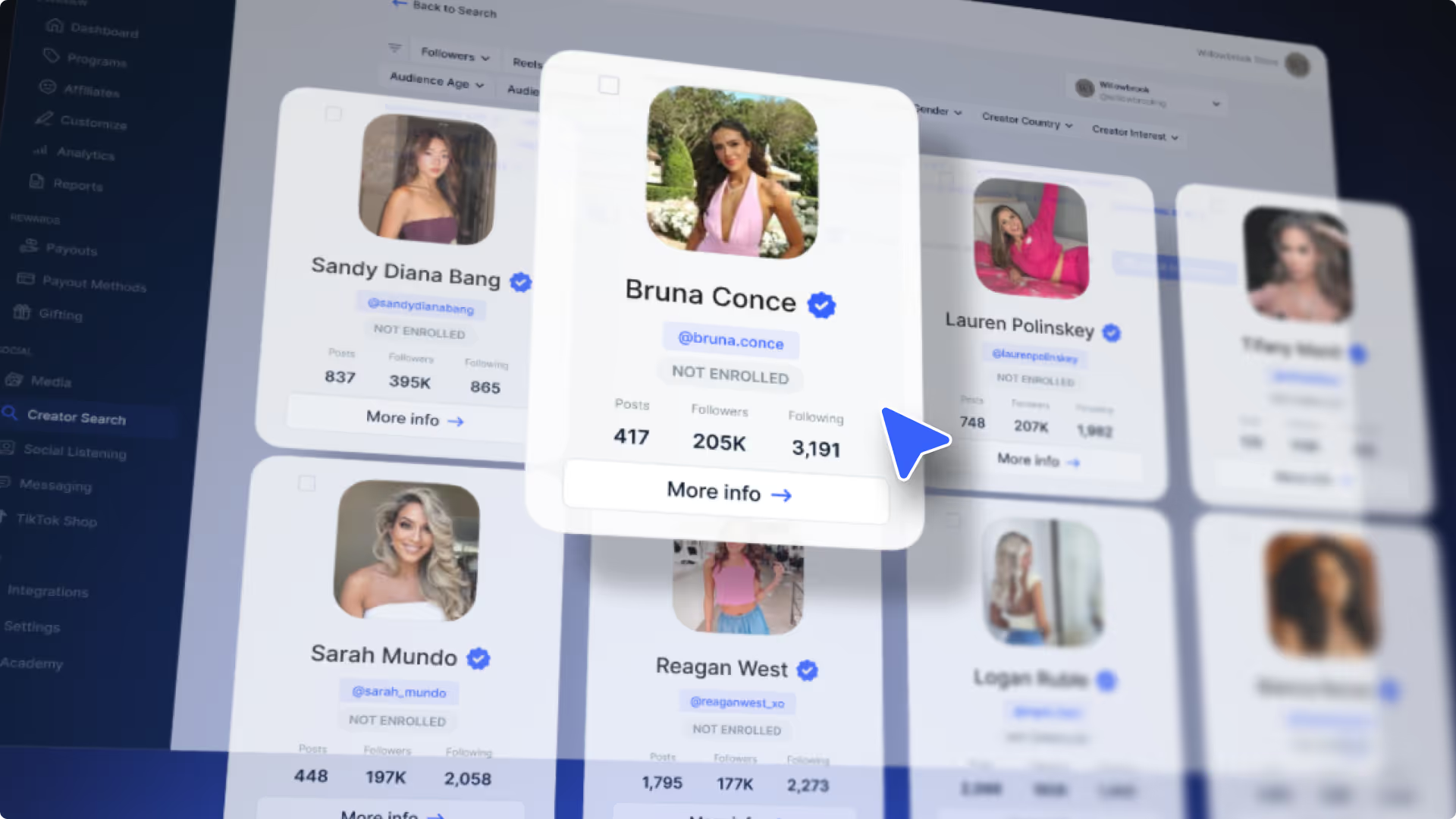
Creator Search by Social Snowball helps you find high-fit creators using keyword search and AI lookalikes, then move directly into outreach, onboarding, and affiliate activation without exporting lists or rebuilding workflows.
4. Join affiliate networks
Affiliate networks can speed up sourcing by giving you access to marketers who are already looking to promote products. Instead of searching one profile at a time, platforms like ShareASale, ClickBank, and Amazon Associates put your offer in front of affiliates actively seeking monetization opportunities.
When evaluating an affiliate network, pay attention to a few key factors:
- Affiliate quality: Some networks focus on quantity, while others have strict vetting processes. Look for networks that attract affiliates with proven traffic quality and real conversion history.
- Affiliate commission structures: Most networks charge platform fees or take a percentage of each sale. Make sure the total cost still leaves room for competitive commissions and healthy margins.
- Niche relevance: Broad networks offer scale, but niche-specific networks can connect you with affiliates whose audience closely matches your target customer.
Affiliate networks can be useful if you want quick access to partners and don’t mind operating within a fixed framework.
The trade-off is control. Networks limit how you structure incentives, manage relationships, and build long-term partnerships.
For brands that want tighter margin control, cleaner attribution, and direct ownership of affiliate relationships, running your own program is often the better long-term option.
5. Hire an affiliate manager
An affiliate manager owns sourcing, relationships, and optimization. They handle your word-of-mouth programs end-to-end, bringing channel expertise, established processes, and experience managing partners at scale.
Hiring an affiliate manager makes sense as your programs scale. However, early on, most brands are better served by tools and systems that automate sourcing, onboarding, and payouts before adding headcount.
6. Promote your word-of-mouth program on your website
Your website is a high-intent surface. Promoting your affiliate marketing program there captures inbound interest from visitors already evaluating your brand.
Effective placements include:
- Exit-intent popup (best option if you have high traffic and strong incentives)
- A section above the homepage footer
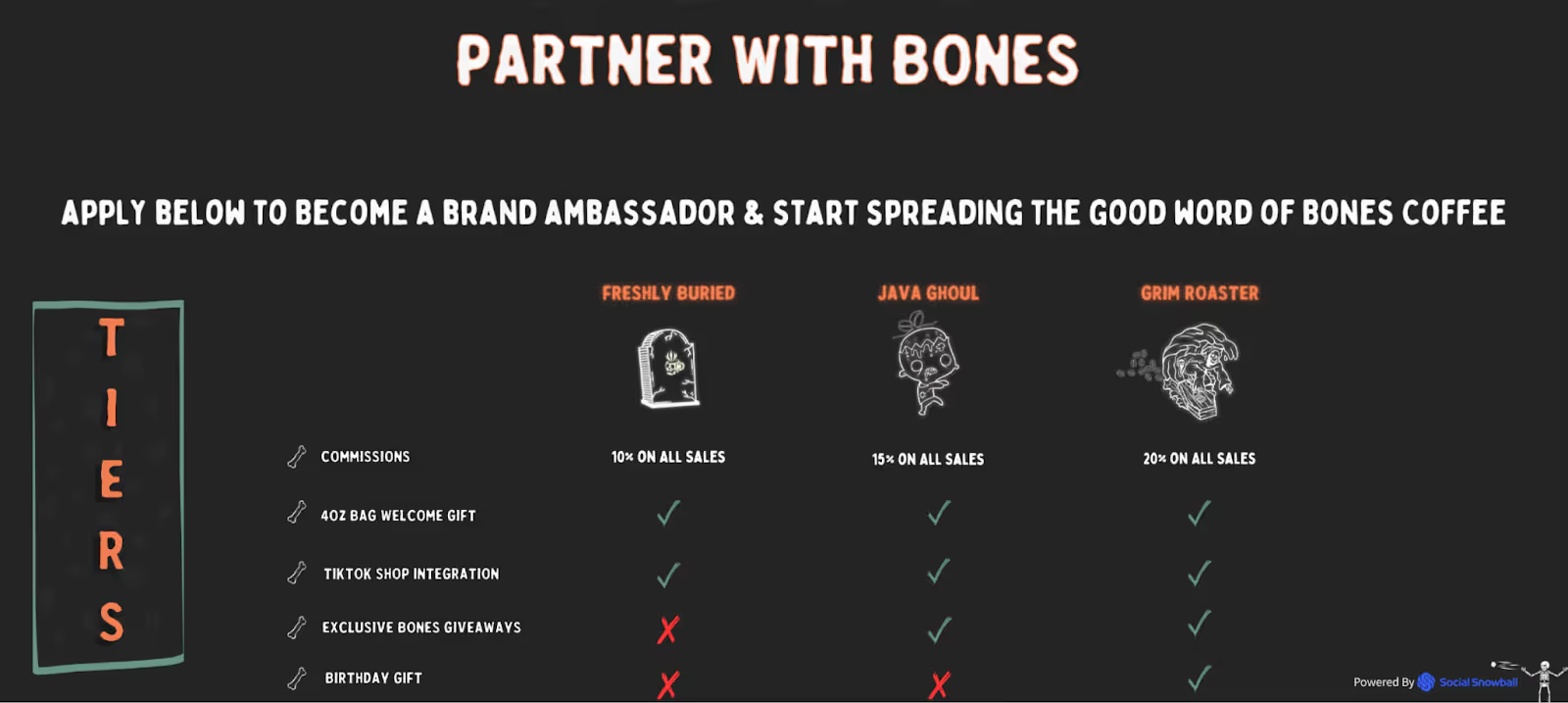
- A dedicated “Affiliate” or “Partner” landing page
This keeps affiliate recruitment always-on instead of limited to outbound efforts.
How to decide who’s worth activating
Finding potential affiliates is only half the work. The real leverage comes from deciding who is worth activating and who should stay in the pipeline.
Evaluate affiliate quality based on:
- Audience relevance, not size: A smaller audience that matches your buyer will outperform broad reach every time.
- Clear buying intent: Look for comments and content that show evaluation, product questions, or real-world use.
- Past brand mentions or product usage: Creators who already talk about similar products convert faster and require less education.
- Consistency and credibility: Regular posting and authentic recommendations matter more than viral spikes.
Without a clear vetting process, teams end up activating affiliates who look promising on paper but fail to convert. That leads to wasted incentives, low ROI, and more manual cleanup later.
Turn affiliate sourcing into a system
Ecommerce brands have more ways than ever to find the right affiliates. The problem most brands now face is fragmentation across their processes. When sourcing, vetting, outreach, activation, and payouts live across different tools, performance stalls and programs become hard to scale.
Affiliate programs work best when every step runs through one system.
That’s exactly what Social Snowball is built for. It gives you a single dashboard to:
- Find high-intent affiliates and creators
- Vet partners based on real signals
- Activate them instantly with unique links and incentives
- Automate outreach, communication, and payouts
- Track performance clearly across your program