
Not all retention strategies drive the same kind of growth.
For ecommerce brands, lifetime value (LTV) reflects how well you retain customers, not just how much you sell. Referral and loyalty programs are two of the most common ways to increase it. Both promise repeat revenue and stronger relationships, but they work in very different ways.
Referral marketing turns customers into advocates who bring in new buyers through trust and word-of-mouth. Loyalty programs reward repeat purchases and encourage existing customers to come back.
In this guide, we’ll break down how each program works, where they fit in your growth strategy, and which approach drives higher LTV based on your brand’s stage, margins, and customer behavior.
What is referral marketing?
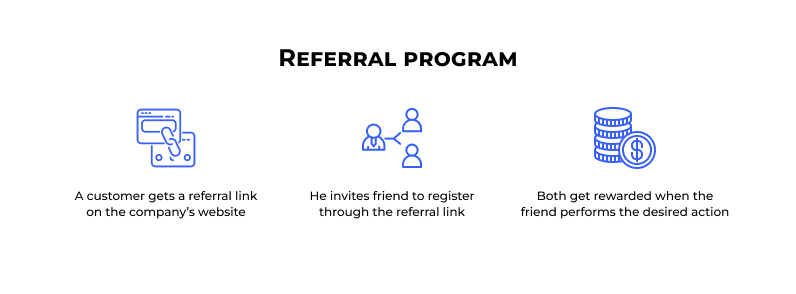
Referral marketing turns your existing customers into your most effective acquisition channel. Instead of relying on ads or influencers, it drives new sales through direct word-of-mouth when a happy customer shares your product with a friend, and both get rewarded for it.
Here’s how it works:
- A customer shares their unique referral link or code with a friend.
- The friend makes a purchase using that link or code.
- Both get rewarded. The referrer earns a perk, and the new customer receives an incentive to buy.
Every referral creates a trust-based introduction that’s far more persuasive than any paid campaign. These programs work best when the product already sparks conversations; something customers naturally want to recommend because it delivers visible results or feels share-worthy.
When to use referral marketing
Referral programs are most effective when your goal is to grow profitably without increasing ad spend. They help you reach new customers through people who already love your brand, making every referral a high-intent, low-CAC conversion.
Some key benefits of referral marketing are:
- Higher LTV and CAC efficiency: Referred customers typically spend more and stay longer than those acquired through paid channels.
- Organic acquisition channel: Each referral adds new customers without recurring ad costs.
- UGC and content amplification: Customers who share also create authentic content, like reviews, unboxings, and social posts that drive further trust.
- Word-of-mouth flywheel: The more referrals you get, the faster your network grows.
- Performance-based scaling: You only pay for conversions, keeping the program ROI-positive from day one.
Best use cases for referral marketing
Referral marketing works best when your customers already love what you sell and are excited to talk about it. The stronger the emotional connection or visible result, the easier it is to turn customers into active advocates.
Some of the best use cases for referral marketing are:
- High-trust categories: Products where recommendations matter, like skincare, health, supplements, and wellness.
- Social-first products: Fashion, lifestyle, or home goods that customers naturally show off online.
- Brands with strong stories: Founder-led or community-driven brands where the mission resonates.
- Everyday products with a twist: Items that surprise or delight customers, prompting them to share unprompted.
- High-retention products: When customers already buy repeatedly, referrals add a layer of organic acquisition without extra spend.
What are loyalty programs?
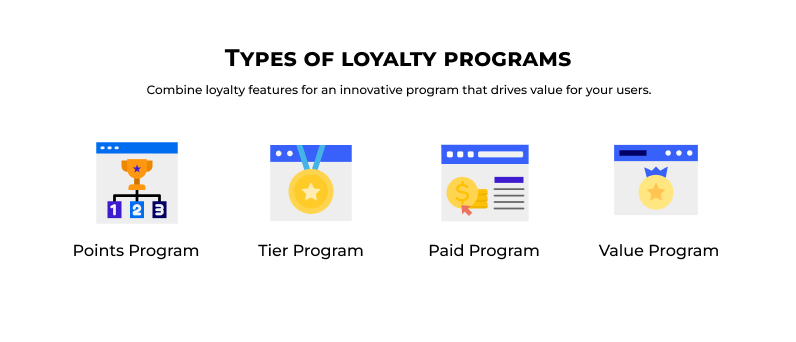
Loyalty programs reward customers for coming back, not for sharing. They’re designed to build repeat purchase behavior by giving points, perks, or tier-based benefits every time a customer buys from your brand.
Instead of focusing on acquisition, loyalty programs strengthen your retention loop. They make returning to your store feel rewarding, keeping customers active and engaged over time.
Here’s a basic structure of how it works:
- Customers earn points for every purchase.
- Those points unlock rewards such as discounts, early access, gifts, or exclusive tiers.
- The more often they buy, the more valuable their perks become.
Loyalty programs are ideal for brands where customers reorder regularly or buy from multiple collections throughout the year. They encourage consistency rather than advocacy.
When to use loyalty programs
Loyalty programs work best when your growth depends on repeat buyers. They help brands with recurring purchase behavior increase order frequency, retention, and overall customer value without relying on new acquisition.
Some key benefits of loyalty programs are:
- Predictable purchase cycle: Best suited for products that customers buy on a schedule.
- Subscription or repeat consumption: Keeps subscribers active and reduces churn.
- Higher AOV consistency: Encourages existing buyers to spend more per purchase through points and perks.
Best use cases for loyalty programs
Loyalty programs work best when your product is part of a customer’s routine. The goal is to keep buyers coming back, not because of discounts, but because they see value in staying connected to your brand. Some of the best use cases for loyalty programs are:
- Routine-based categories: Skincare, supplements, and wellness products that customers restock regularly.
- Replenishment or subscription models: Consumables with defined reorder cycles, like coffee, protein, or pet care.
- Merch or fashion with frequent drops: Brands that release new collections often and want to reward early access or loyalty-based perks.
- High-AOV repeat purchases: Products where rewarding retention adds meaningful lifetime value.
- Brands focused on customer lifetime, not one-time sales: Perfect for those looking to strengthen relationships and reward consistency.
Differences between referral marketing and loyalty programs
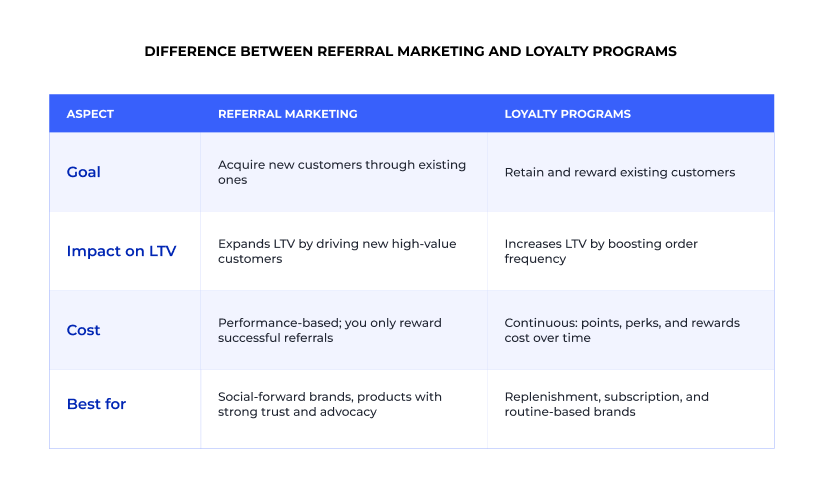
While both referral and loyalty programs drive retention, they do it in completely different ways. Referral programs focus on acquisition through advocacy, while loyalty programs focus on retention through repeat purchases. The right choice depends on your product type, customer behavior, and growth stage:
- Goal:
- Referrals drive new customer acquisition through existing buyers
- Loyalty programs drive repeat purchases from current customers.
- Impact on LTV:
- Referrals multiply LTV by adding new, high-intent customers
- Loyalty programs increase it by improving order frequency.
- Cost:
- Referral rewards are performance-based (you pay only when a sale happens)
- Loyalty programs have ongoing costs tied to perks and discounts.
- Best for:
- Referral programs suit brands with social, trust-driven products
- Loyalty programs suit replenishment or subscription-based brands.
Which drives higher LTV?
Both referral and loyalty programs contribute to lifetime value, but in different ways.
Loyalty programs increase order frequency by rewarding repeat purchases and keeping customers active longer. They maximize value within your existing customer base.
Referral programs, on the other hand, impact both sides of the equation. They bring in new customers and encourage existing ones to repurchase. This dual effect compounds over time, creating a flywheel that multiplies overall LTV.
However, it is important to note that referred customers consistently show higher lifetime value than those acquired through paid ads. They buy faster, churn less, and often become referrers themselves, creating a self-sustaining loop of growth.
A hybrid approach: Combining referral marketing with loyalty programs
While referral and loyalty programs work differently, they become even more effective when used together. A hybrid approach helps you capture both acquisition through referrals and retention through rewards, creating a cycle where customers keep buying and keep bringing in new ones.
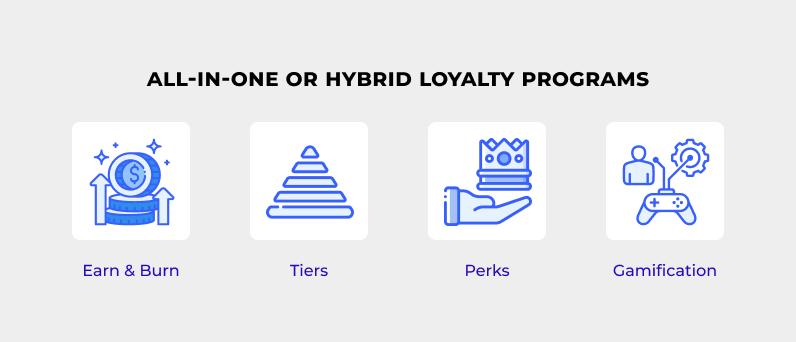
Here’s how the hybrid flywheel works:
- Post-purchase auto-enrollment: Every customer is automatically added to your referral program after checkout, making it effortless to start sharing.
- Reward both sharing and repeat buying: Customers earn rewards for referring friends and for coming back to shop again.
- Tiered ambassador track: Your most active referrers unlock exclusive perks or ambassador status, motivating consistent engagement over time.
How to combine referral marketing with loyalty programs
A hybrid setup only works when your referral and loyalty systems talk to each other. Each action (a purchase, a share, and a repeat order) should feed into the same rewards engine. Here’s how to set it up in a way that actually drives results:
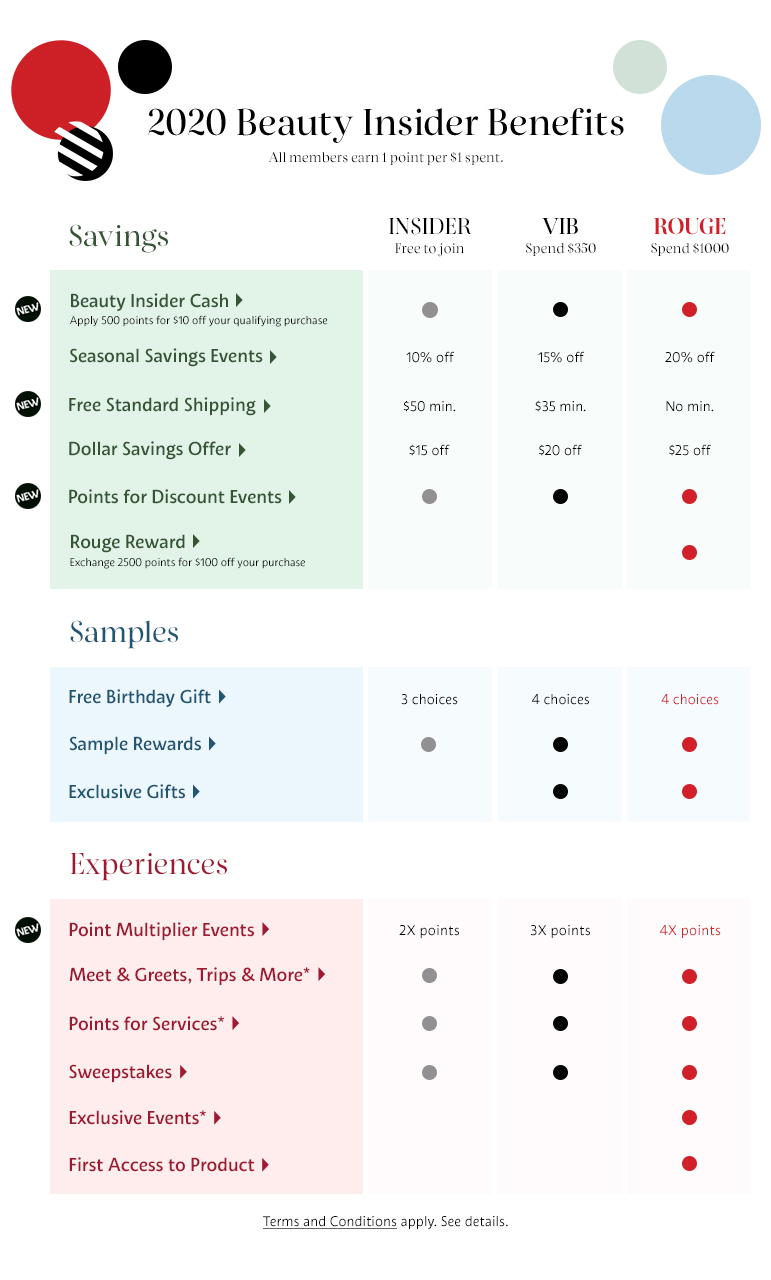
- Sync your referral and loyalty programs under one reward logic: Make sure both systems use the same currency, like points, perks, or tiers. For example, Sephora’s Beauty Insider Program allows customers to earn and redeem points from purchases and referrals within the same dashboard.
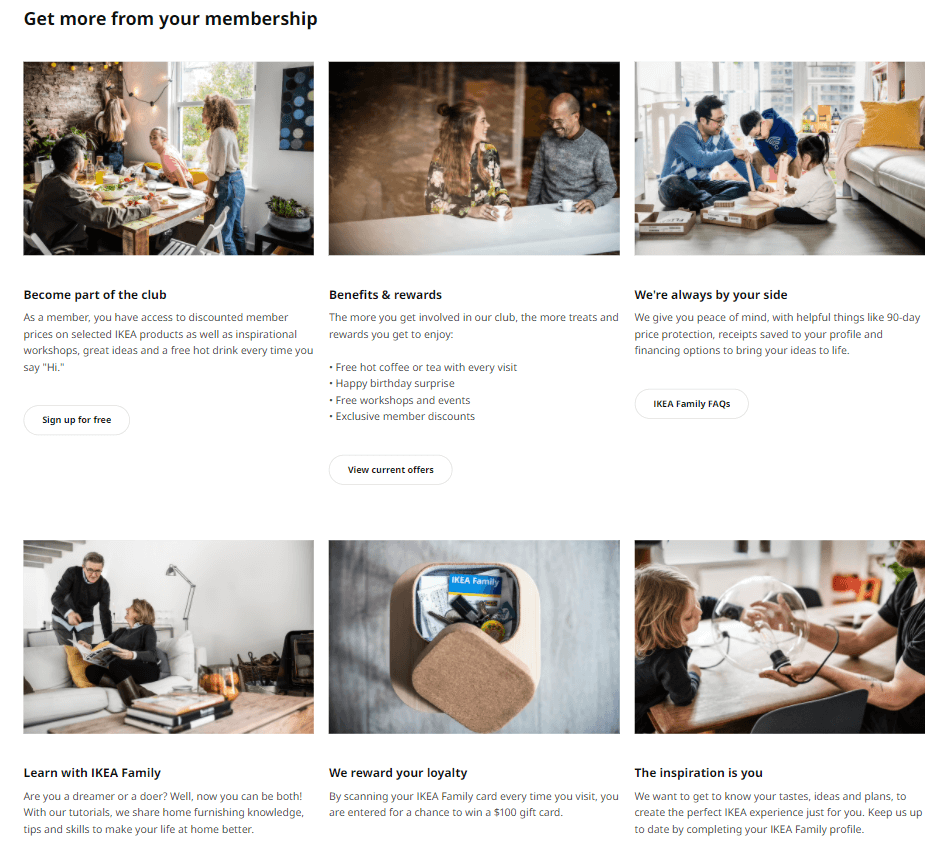
- Let referral rewards convert into loyalty benefits: Instead of offering one-off discounts, let customers redeem referral bonuses as points or higher-tier perks. This ties advocacy directly to retention. IKEA Family, for instance, blends referral incentives into its loyalty system. Customers can share offers that reward both the referrer and the new buyer.
- Use automation to track and tier customers: Automate the process using tools like Social Snowball so a customer’s referral and purchase activity both count toward tier upgrades. When someone reaches a referral milestone or a spending threshold, they automatically move up to the next level.
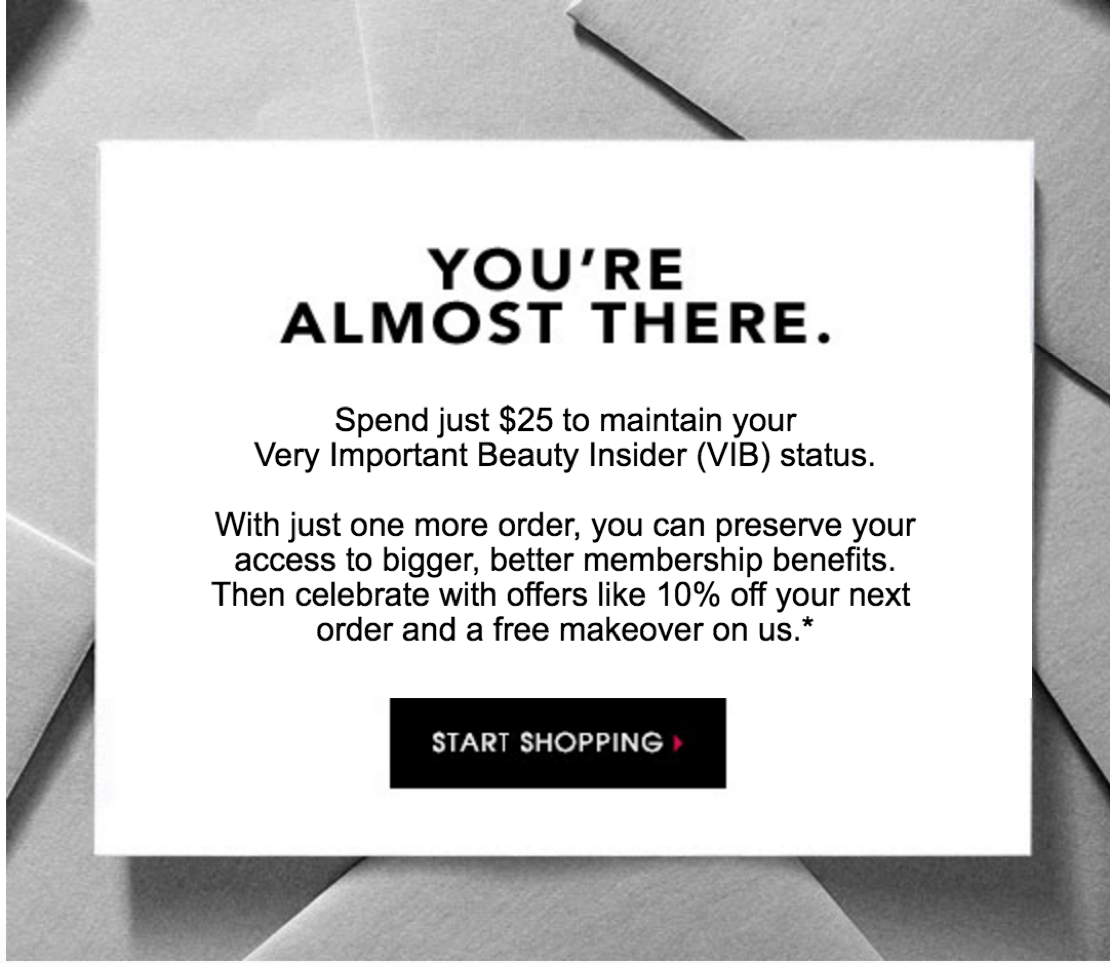
- Keep communication timely and personal: Trigger automated messages when customers are close to earning their next reward or tier. It builds anticipation and keeps them engaged. Sephora does this effectively, notifying members when they’re just a few points away from unlocking the next Insider tier.
How to pick the right approach
Referral and loyalty programs don’t compete, but solve different problems. The right choice depends on where your growth is stuck.
For example, if you’re struggling with acquisition, referral programs open a new performance channel. Similarly, if your challenge is retention, loyalty systems stabilize revenue and build habits. If you want both, a hybrid approach combines the strengths of each.
Let’s break down how to decide what fits your brand right now.
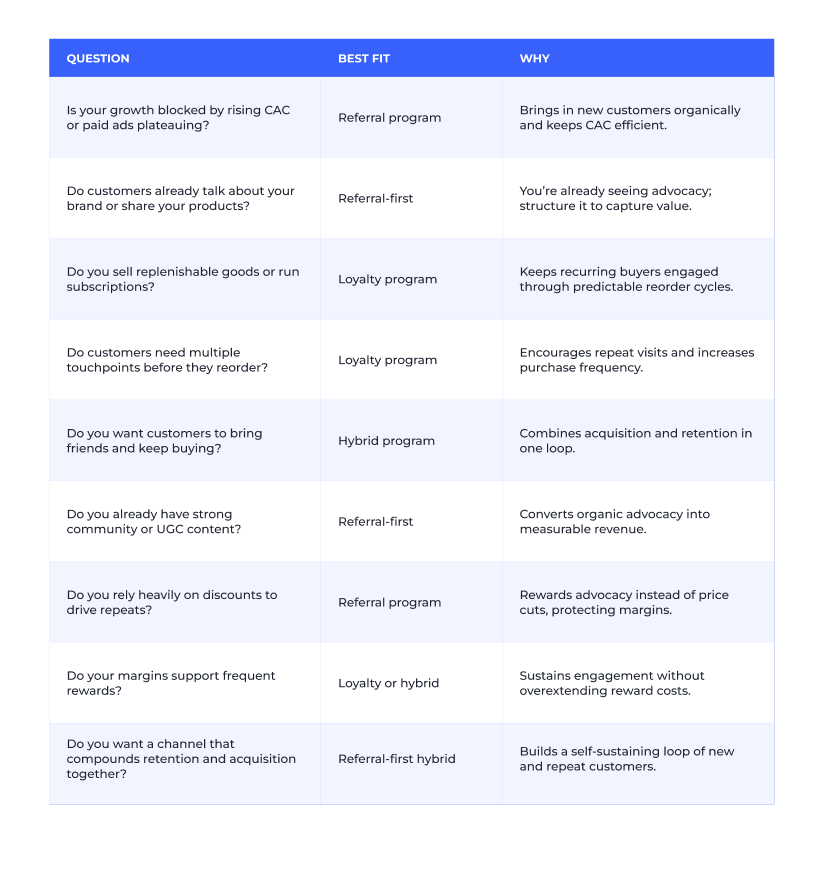
Based on growth goals
The right marketing approach depends on your goals, margins, and customer behavior. Use these checkpoints to decide which one aligns best with your brand’s growth stage.
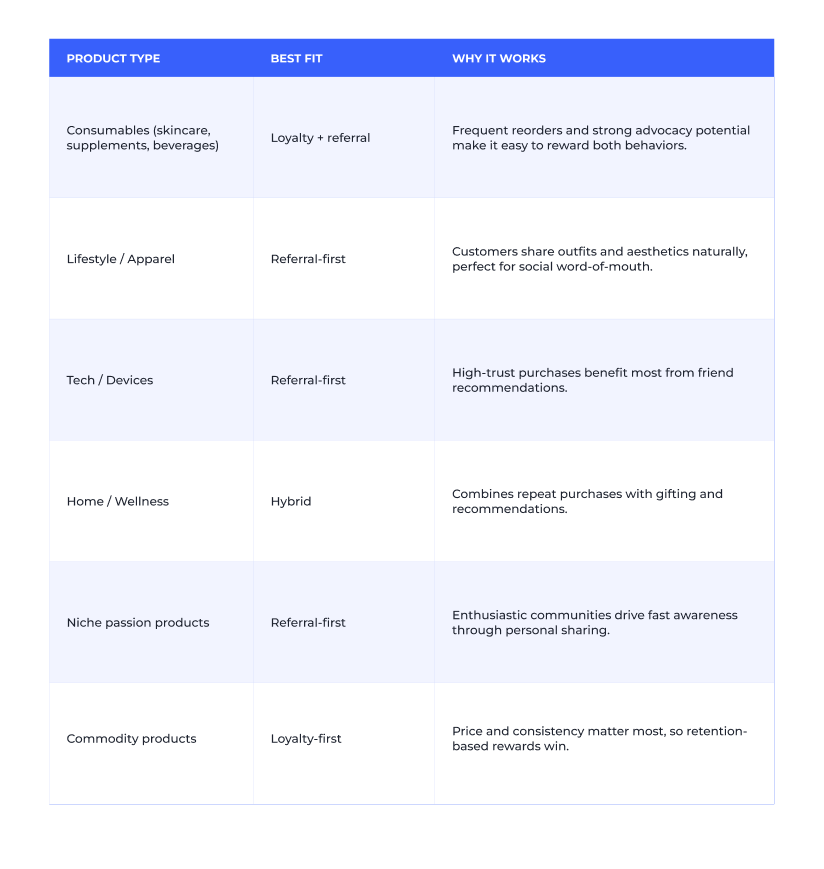
Evaluating based on products
Different product types benefit from different program structures. Here’s how to think about it:
Based on customer behavior signals
Behavior tells you more than intent surveys ever will. Look at how your customers already act before choosing:
- Referral-first if your customers:
- Tag your brand organically or share unboxing and tutorials.
- Leave unsolicited reviews or testimonials.
- Engage in active online communities (e.g., “gym TikTok,” skincare forums).
- Respond better to authentic UGC than polished brand ads.
- Loyalty-first if your customers:
- Reorder regularly on a 3–6 month cycle.
- Need education or onboarding to experience full value.
- Prioritize consistency, savings, or benefits.
- Hybrid if your customers:
- Show both social engagement and steady purchase behavior.
- Buy frequently in high-UGC categories, like beauty, wellness, or CPG.
Based on margins and CAC
Your margins define how much you can afford to reward, and that directly impacts which model scales profitably:
- Tight margins or high-paid CAC: Go with referral. You pay only for performance.
- Healthy margins and subscription revenue: A loyalty program works best for predictable retention.
- Goal is to keep CAC profitable: Sse referral marketing because it’s conversion-based and cost-efficient.
- Goal is to move away from discounts while driving growth: Try a referral or hybrid system.
Based on brand maturity
Your brand stage shapes what you need more: new buyers or deeper relationships.
- Early-stage brands: Go referral-first. It builds organic acquisition before you invest heavily in retention infrastructure.
- Scaling brands: Adopt a hybrid model to compound advocacy and repeat sales.
- Enterprise brands: Use a hybrid system with advanced tiers, cross-sell triggers, and integrated customer data.
Ready to improve your LTV with the right rewards system?
Not every brand needs both referral and loyalty programs. The right setup depends on your product type, customer behavior, and growth goals.
If your customers already share your products organically, start with a referral program. It compounds faster and drives higher-value customers without extra ad spend.
If you’re optimizing for repeat orders and retention, a loyalty program may be a better first step.
But if you want a single system that rewards both advocacy and repeat buying, a hybrid approach is worth testing.
With Social Snowball, you can set up referral programs that run automatically, from post-purchase activation to real-time tracking and payouts. It’s quick to plug in, fully Shopify-native, and scales with your brand.


.png)


