
Brands with loyal buyers have one advantage that outperforms ads every time. They’ve built a community.
These spaces give customers a sense of belonging, enable customer-to-customer conversations, deepen trust, and keep existing buyers engaged. They also make purchasing decisions easier because people are influenced by each other, not by ads.
It’s not a channel with linear, trackable results, but over time, it drives more word-of-mouth growth and reduces your reliance on paid acquisition.
In this article, we’ll break down how community-driven ecosystems work, why they boost LTV for DTC brands, and how to build one using proven tools and tactics.
What is community commerce?
Community commerce is when buying decisions are influenced by real conversations happening inside communities—online groups, creator audiences, comment sections, Discord chats, and brand-owned spaces.
Instead of ads driving the sale, it’s trust, shared experiences, and social proof that motivates people to make a purchase.
Here are examples of community commerce:
- A TikTok creator’s audience asks follow-up questions in the comments.
- Customers recommend your product inside a Facebook group.
- A Discord member posts their experience, and others buy because they trust them.
- Loyal buyers swap tips, reviews, or unboxings in your brand community.
- Micro-communities (like subreddits or niche creator followings) spark organic demand.
At its core, community commerce turns conversation into conversion. It lifts retention, boosts LTV, and reduces reliance on paid ads because purchases happen through people, not platforms.
Core components of community commerce
Community commerce works because it taps into four psychological drivers that shape how people discover, talk about, and buy products:
- Shared identity: People join communities where they see themselves—similar goals, interests, aesthetics, or values. This shared identity becomes the foundation of trust, which makes product recommendations feel credible, not promotional.
- Conversation: Products naturally show up in everyday discussions—Discord threads, TikTok comments, group chats, creator livestreams. Buying becomes an outcome of the conversation, not the goal. The recommendation feels like a friend’s suggestion, not a pitch.
- Participation: Members create and circulate content around what they love: tutorials, unboxings, reviews, and before-and-after shots. Their participation turns the community into a self-sustaining content engine that keeps the brand visible without constant paid spend.
- Social proof: Every tag, comment, review, or UGC clip reinforces credibility. Seeing real people repeatedly vouch for a product shortens the decision cycle and converts hesitant shoppers faster than any ad can.
Where communities are built
Community commerce thrives wherever real conversations happen, not just where brands post:
- Discord: Micro-communities built around niches—fitness, gaming, wellness, skincare.
- Instagram groups: Private or close-friends circles where people swap recommendations.
- TikTok user comments: Mini-discussions that turn trends into mass buying moments.
- X (formerly Twitter): Threads and creator replies where opinions spread fast.
- SMS VIP clubs: Text-based loyalty groups where members get insider access.
- UGC affiliate networks: Ecosystems where customers, content creators, and affiliates overlap.
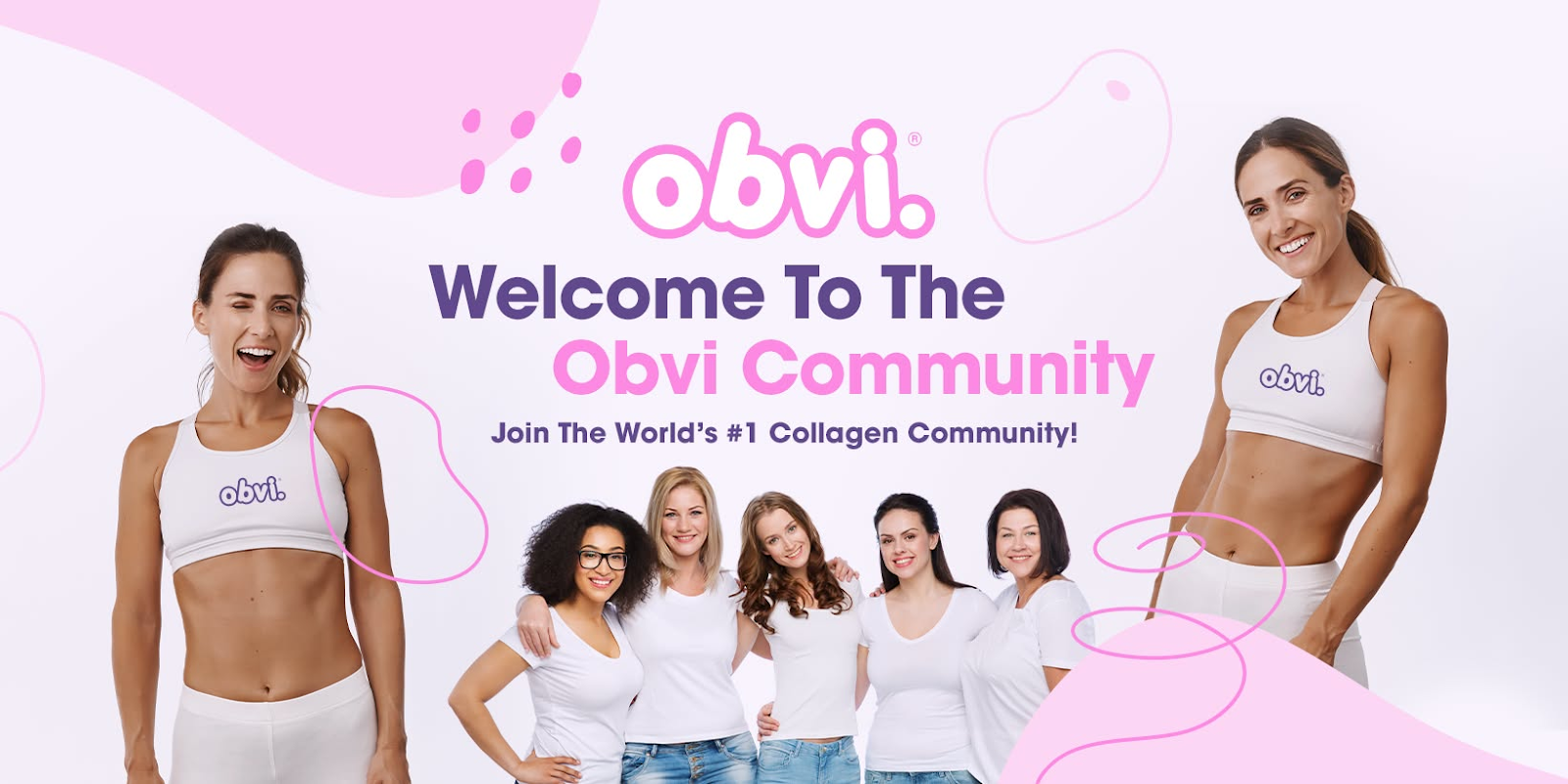
For example, Obvi, a health and beauty brand, uses tight-knit online forums and user-generated content (UGC) challenges to keep its audience engaged and to encourage repeat purchases.
Why community-led brands have higher LTV
Community-led brands win because they build relationships that keep compounding through trust, attention, and advocacy. You’re acquiring customers and compounding brand loyalty.
Here’s how the power of community commerce drives higher lifetime value:
1. Trust drives faster conversions and repeat purchases
Buyers trust peers more than paid media. When your product circulates through UGC, reviews, and authentic creator posts, customers don’t need long persuasion cycles. They buy faster and with higher intent.
That same trust drives repeat purchases because the proof keeps renewing itself through new stories and use cases shared by real people.
2. Owned attention lowers CAC and protects margins
When your community lives on channels you control (email, SMS, Discord, or TikTok groups), you’re not paying to reach them.
Every message goes directly to people who already care. This lowers acquisition costs, reduces reliance on paid ads, and shields your margins from volatile CPMs. You own the relationship and aren’t controlled by the algorithm.
3. Higher purchase frequency through emotional connection
When buyers feel they belong, they naturally engage more often.
That sense of belonging changes behavior. Occasional shoppers turn into repeat customers because buying becomes a way to stay connected to the group.
4. Social currency creates organic referrals
People share what reinforces their self-image. In community-led brands, every product story, challenge, or testimonial gives members that social reward.
They post, tag, and recommend because it earns them credibility within their circle. That pride scales your brand faster than any referral discount ever could.
5. Feedback loops improve products and retention
A community gives you continuous product feedback before you even launch something new. You learn what customers love, what they’re missing, and what they’ll pay for next, all without surveys or guesswork.
This turns your community into a real-time R&D engine and your customers into co-creators; the strongest form of retention there is.
How to build a community-led brand
A brand becomes community-led when customers stop seeing themselves as buyers and start identifying with your purpose. This shift happens when you define who belongs, give them a space to connect, and empower the right voices to lead.
Here’s how to turn that vision into something real and revenue-driving.
1. Define your community identity
Before you build, define who your community exists for and why it matters. Community-led growth only works when people feel like they’re a part of something bigger than just your products.
Start by clarifying:
- Who it’s for: Be specific; identify the customer segment that naturally connects with your brand.
- Shared values & language: Define the tone, beliefs, and everyday phrases that resonate with them.
- Purpose beyond product: Decide what your brand helps people achieve based on what you sell.
Take Alo Yoga, for instance. Beyond selling activewear, the brand positions itself as a complete wellness ecosystem. Through memberships that include yoga, mindfulness, and fitness classes, Alo creates consistent engagement that keeps people coming back.

2. Set up your channels to foster community
Your channels are how people connect, share, and stay engaged. Build in layers:
- Owned channels: Start with email, SMS, and private groups (Discord, Geneva, Skool, or Slack). Use these spaces to:
- Share early access to launches and exclusive content.
- Reward loyal customers and highlight community members.
- Gather feedback or host small drops that make people feel like insiders.
- Public channels: Scale the connection through TikTok, Instagram, and Reddit. Use them to:
- Showcase your team, values, and product journey.
- Feature UGC and customer stories to create belonging.
- Invite followers into your private spaces.
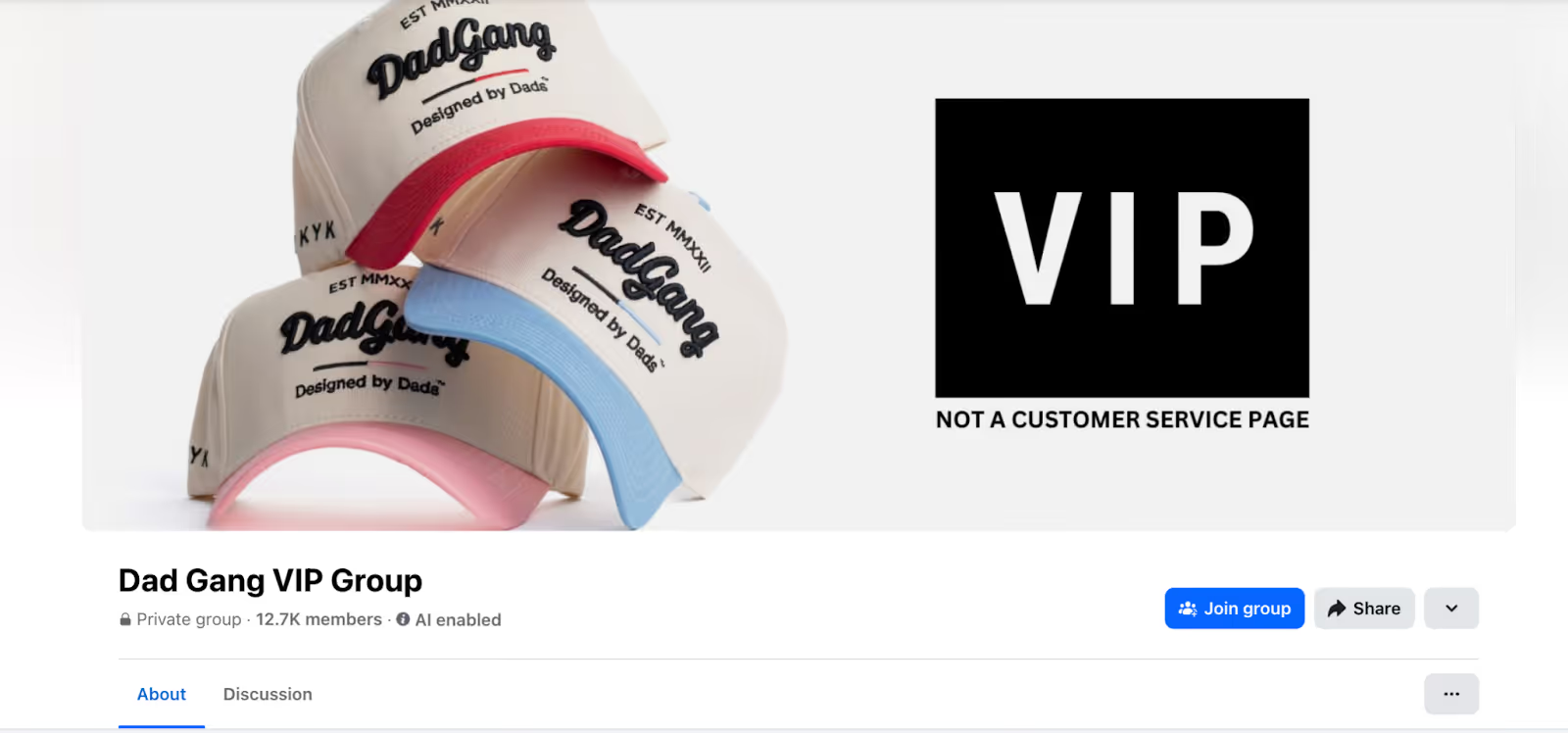
DadGang, for example, a brand reshaping modern fatherhood through fashion, built a community of more than 4,000 affiliates that drove over $190,000 in incremental revenue.
By creating a Facebook group for fathers who connect with its mission, the brand gave customers a space to share stories, discuss their experiences, and showcase how they wear DadGang products in real life.
3. Activate creators and identify long-term advocates
Creators are the bridge between your brand and your community. They already have the trust and credibility that make community commerce work, especially when they share real experiences rather than scripted ads.
Some ways to activate creators and identify long-term advocates are:
- Start with warm customers and micro-creators already talking about your brand.
- Give them auto-generated fraud-protected links (via Social Snowball’s Safelinks), content kits, and clear briefs so they can post instantly.
- Focus on conversion rates, repeat buyers, and engagement quality, rather than follower counts.
- Turn consistent creators into ambassadors with tiered rewards, early access, and public recognition inside your community.
4. Turn customers into advocates, not just followers
Followers watch your brand while advocates grow it. They drive word-of-mouth marketing and build trust faster than any ad ever could.
Your goal is to turn every happy customer into an active promoter; someone who proudly represents your brand in their circles. Here are some ways you can turn your existing customers into brand advocates:
- Auto-enroll customers post-purchase: Use tools like Social Snowball to automatically convert buyers into affiliates or loyalty members right after checkout.
- Gamify sharing: Reward community actions (referrals, UGC, reviews) with points, early access, badges, or exclusive drops.
- Design share-worthy experiences: Make unboxing, packaging, and post-purchase moments worth showing off.
- Feature your customers: Highlight them in your social posts, emails, and community channels. When they see themselves in your brand story, they become your loudest advocates.
For example, Triquetra Health set up an automatic referral program with a 15% commission for every customer, making sharing effortless. Within months, the brand onboarded 6,246 new affiliates, saving hours of manual work and driving a sharp increase in sales through customer referrals.

5. Build shared rituals & recurring touchpoints
Once you’ve built momentum, you need structure to sustain it. Communities grow stronger through predictable, repeatable interactions. These rituals give members something to rally around and create a rhythm that keeps your brand top of mind.
Some tips to create these recurring touchpoints are:
- Run monthly challenges: For example, a “30-day wellness check-in” for nutrition brands or a “style remix” challenge for fashion.
- Host weekly touchpoints: Live Q&As, behind-the-scenes founder sessions, or casual hangouts.
- Offer member-only access: Limited-time windows or product previews exclusively for your private group (many brands run these through Facebook or Discord).
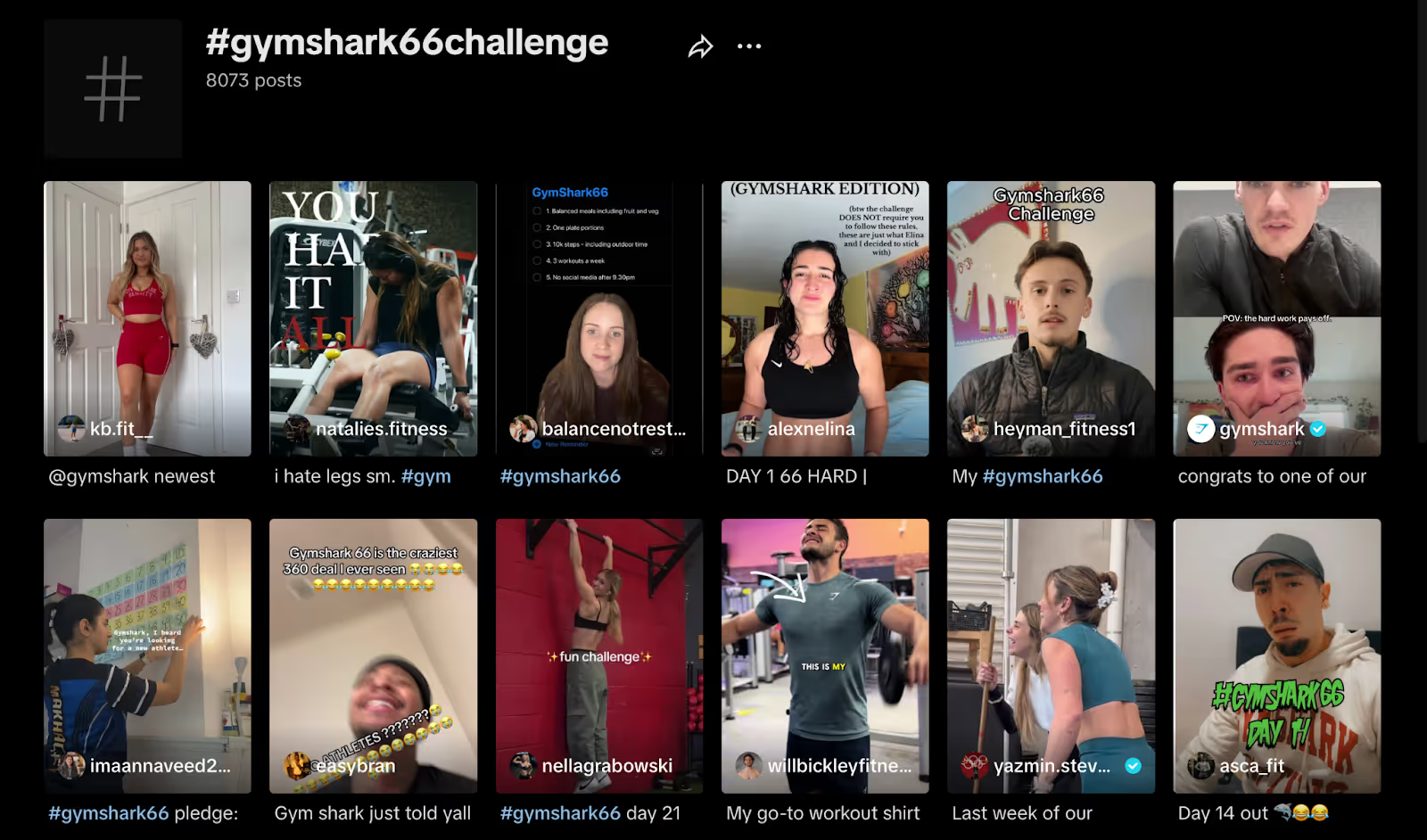
- Launch branded hashtag challenges: Encourage UGC around moments that your community cares about (#MadeWithMyCosmix or ##Gymshark66challenge) to keep members sharing and participating.
6. Reward contribution publicly
Communities survive on recognition. The more visible your appreciation, the more likely people are to keep contributing.
Acknowledging your top members strengthens loyalty among active participants and sets an example for everyone else. When people see peers being celebrated, they’re reminded that effort matters and that belonging has value.
You can start by creating:
- Leaderboards: Highlight top contributors or referrers each month in your private group or in emails.
- Community hero of the month: Feature standout members across your brand’s channels.
- Exclusive merch or access: Send surprise gifts or limited products to your most active advocates.
- Public spotlights: Share member testimonials, transformation stories, or UGC on your feed. These become social proof and motivation for others.
7. Build a co-creation pipeline
When customers help shape what you sell, they stop being buyers and start becoming stakeholders. That sense of ownership strengthens loyalty and drives repeat engagement.
Co-creation doesn’t have to be complex. It starts by inviting your community into the product development process— testing early versions, voting on new flavors, scents, or designs, or sharing feedback that directly shapes the final release. Each touchpoint gives members proof that their voice has impact.
You can implement this approach through:
- Early tester programs where top customers receive unreleased products.
- Pre-launch votes using polls on Instagram Stories, Discord, or email.
- Feedback surveys tied to rewards, where completing input unlocks perks or early access.
- “Build With Us” drops that clearly credit the community for co-developing a product.
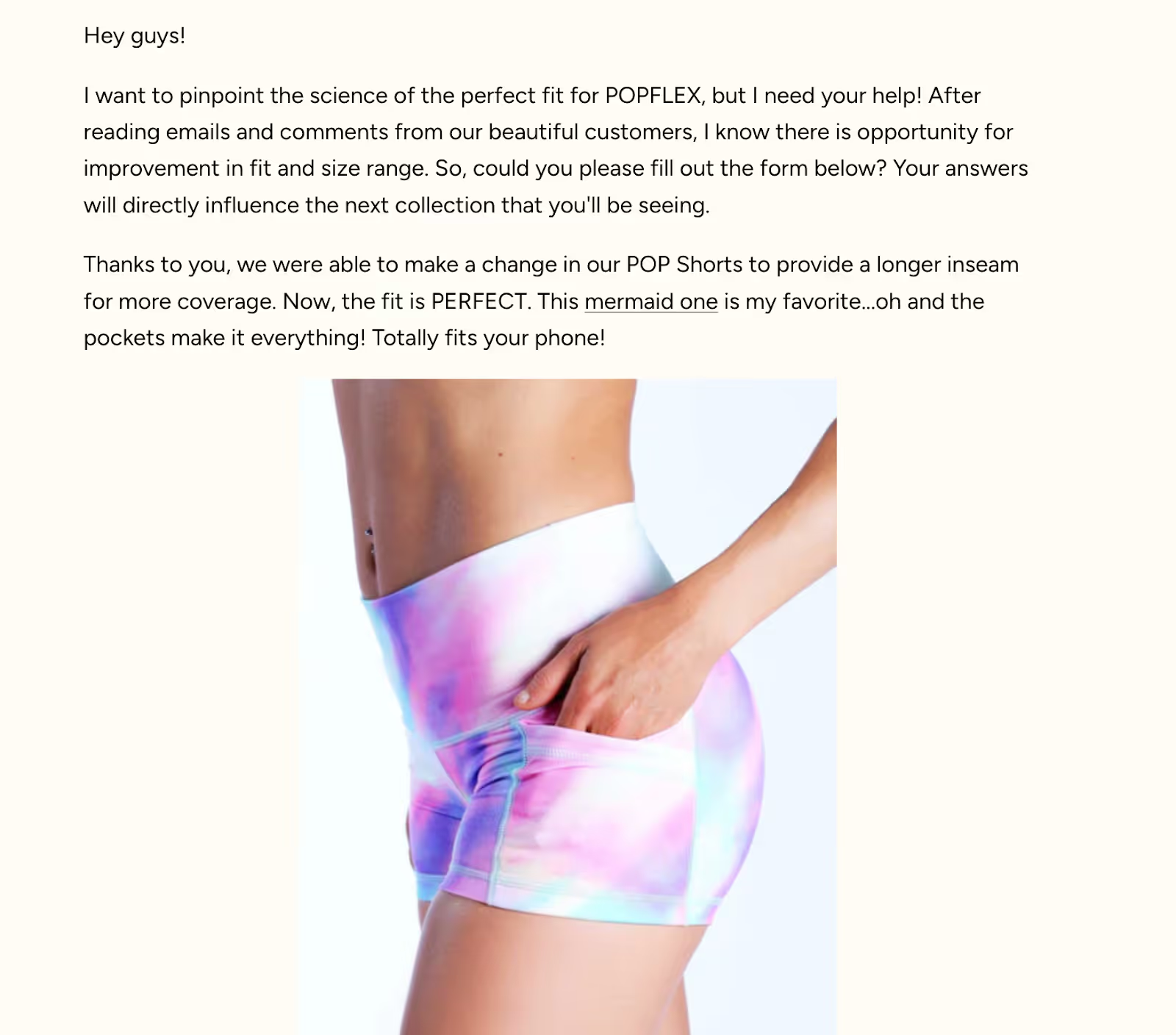
For example, Popflex routinely involves its Instagram community in product design. They ask followers to vote on prototypes, collect suggestions, and reiterate based on responses.
8. Operationalize your community
A thriving community feels organic on the surface, but behind the scenes, it runs like any other growth channel with structure, metrics, and accountability. Without a clear system, communities turn noisy and unproductive. When managed with precision, they become one of the most efficient engines for retention and LTV.
- Start by assigning a Community Lead or Advocate Coach: someone responsible for maintaining engagement rhythms, responding to members, and spotting potential advocates.
- Next, define KPIs that tie directly to business outcomes, such as:
- Active member rate (posts, comments, or attendance).
- UGC volume per month (new content tagged or submitted).
- Repeat order rate among community members.
- Revenue influenced by referrals or affiliate sales.
- Review performance like any other growth channel. Run monthly reports on community-influenced revenue, analyzing how participation correlates with sales, retention, and CAC reduction.
- Automate as much as possible. Tools like Klaviyo, Postscript, and Social Snowball make these systems seamless, from welcome messages to payout reminders.
Tools to power community commerce
Running community commerce at scale is about using the right stack to turn conversation into conversion. These are the core tools that keep your community active, your customer relationships personal, and your revenue loops automated:
1. Klaviyo: Power personalized communication
Klaviyo helps you turn community interactions into ongoing conversations. Use segmentation and behavior-based email flows to:
- Re-engage your most active community members.
- Trigger rewards or early-access drops for top contributors.
- Personalize post-purchase messaging using data from your affiliate and referral programs.
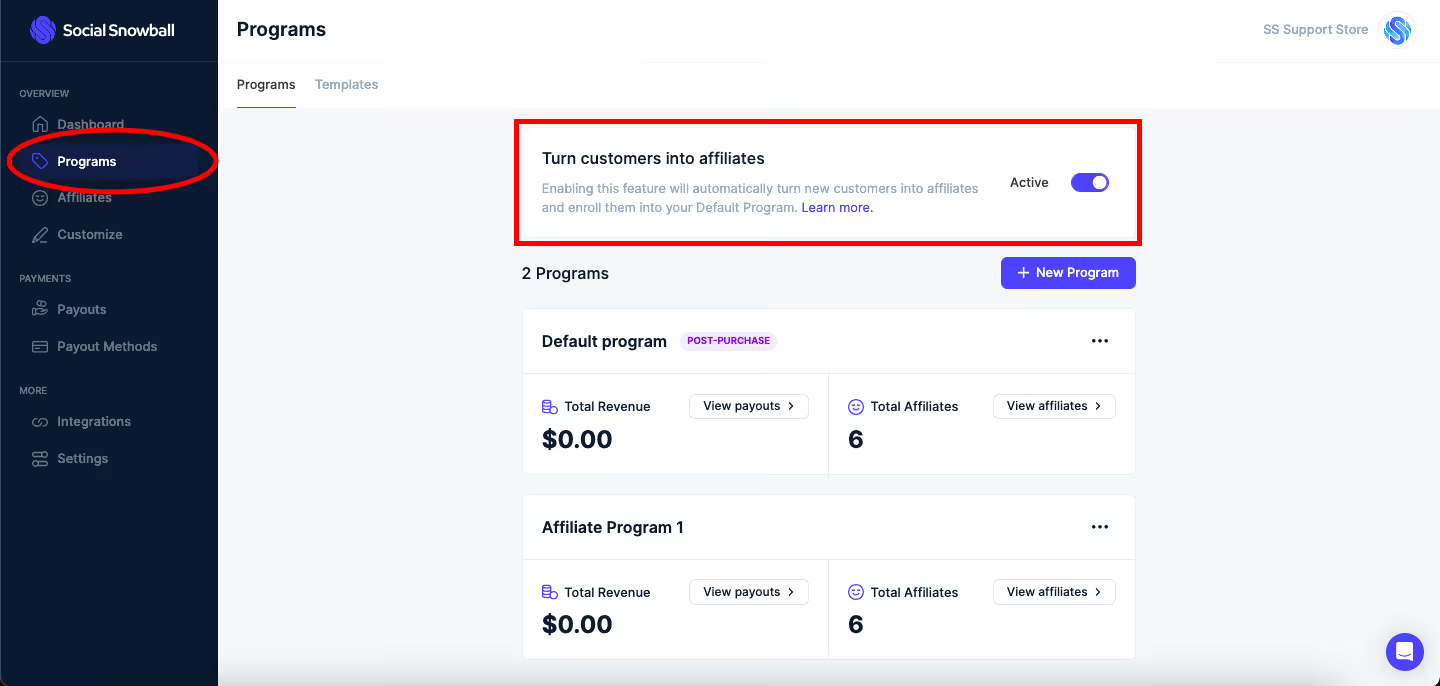
2. Social Snowball: Activate your community as affiliates
Social Snowball turns every customer into an affiliate or referrer automatically. It connects community behavior to measurable sales by:
- Auto-generating affiliate links or Safelinks right after checkout.
- Tracking creator-driven sales from TikTok Shop or social media platforms.
- Handling bulk payouts and gifting directly from your Shopify dashboard.
3. Discord, Geneva, or Skool: Build your community hub
These platforms serve as the digital home base for your brand’s community. Here’s how they support community commerce:
- Host niche-based channels for feedback, drops, and peer interaction.
- Create spaces for user showcases, product launches, or UGC contests.
- Keep your audience close without relying on social-media algorithms.
Choose the right community tool based on your brand’s personality: Discord for fast-paced chat, Geneva for lifestyle and brand communities, Skool for structured learning or creator-led spaces.
4. TikTok Shop and creators: Drive authentic discovery
TikTok Shop merges entertainment and commerce. Partner with creators already part of your niche and track sales directly through TikTok Shop.
- Partner with creators for authentic UGC.
- Use creator-led UGC for product education.
- Design and launch trends based on your community identity.
- Capture impulse sales while maintaining an authentic brand voice.
5. Gorgias: Close the CX loop
Gorgias centralizes customer support, giving your team visibility into how community members interact with your brand. Some use cases of this tool are:
- Turn support tickets into learning opportunities and product insights.
- Tag VIP customers or community leaders for faster response.
- Feed recurring questions and feedback into your product and email loops.
This closes the gap between what customers say in your community and how your team acts on it, helping you find ways to optimize and tighten the customer experience.
Improve retention and LTV with an online community
Communities help ecommerce brands lower CAC, increase LTV, and create a brand moat that paid ads can’t touch. When you bring customers and creators together, every interaction compounds: trust drives product discovery, participation drives sales, and connection drives retention.
The key is to start early and scale gradually. Build spaces where your customers can talk to each other, not just to you. As your brand grows, your community becomes your most sustainable channel, powering referrals, repeat purchases, and loyalty without paid media.
That’s exactly what Social Snowball was built for. It automatically turns every customer into a referrer at checkout, tracks sales, manages payouts, and protects your margins with unique, fraud-protected affiliate links. It’s the easiest way to turn community energy into measurable revenue without adding manual work.

.avif)


