
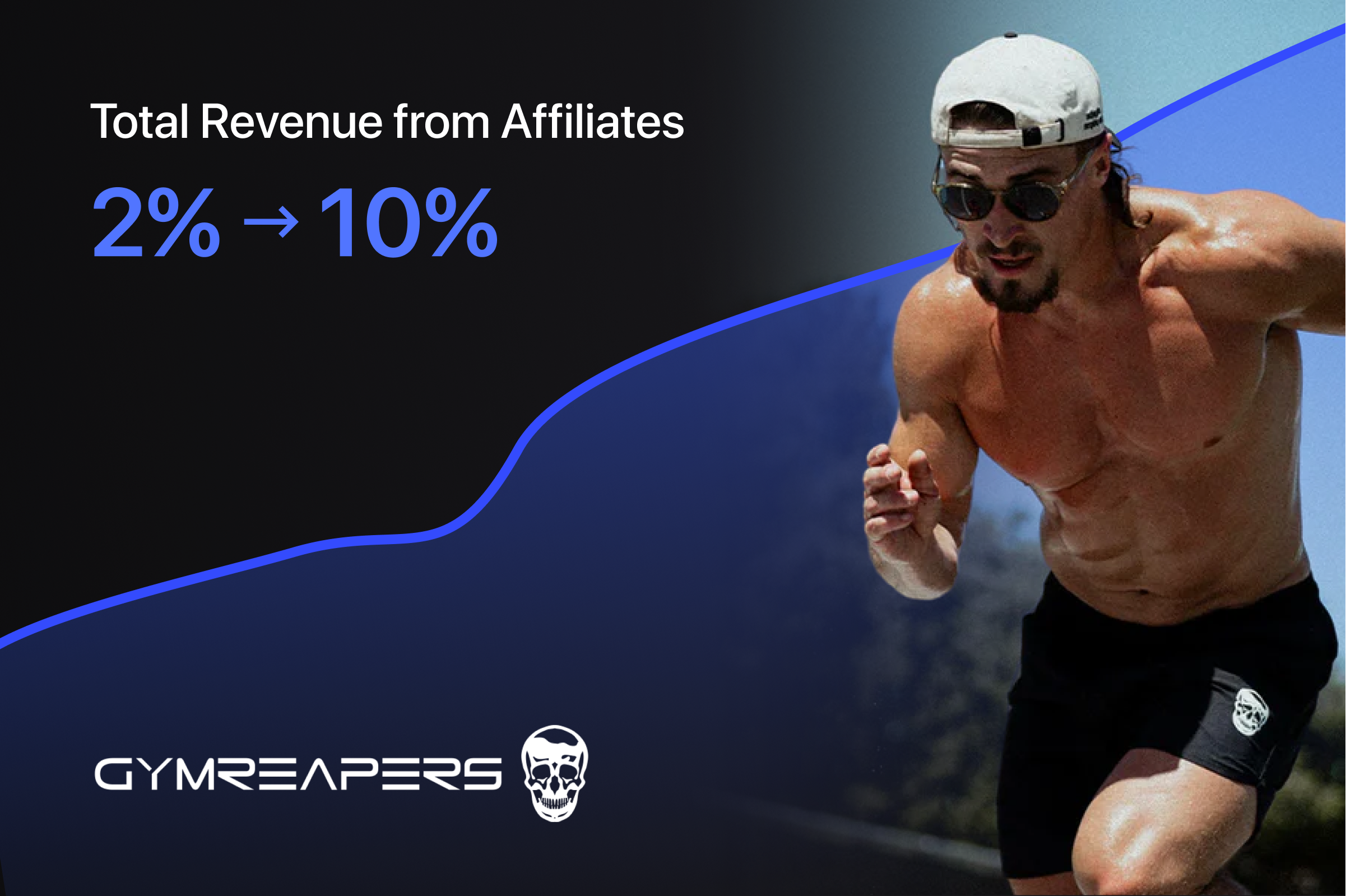
Affiliate programs often look strong on the surface. You have creators joining, content going live, and revenue coming in. But behind that, things can start to break down. Affiliates sit across different tools, communication is inconsistent, and it becomes difficult to scale performance beyond a small group of top creators.
Even with steady demand and a growing creator base, the channel struggles to grow in a meaningful way. For many brands, affiliate contribution stays under 2% of total revenue.
Gymreapers ran into the same challenge.
The team had a strong network of athletes and creators, along with consistent traffic and brand demand. What was missing was a structured system to manage affiliates, track performance clearly, and scale what was working.
After rebuilding their affiliate program with Social Snowball, the channel started to operate with far more consistency and control.
Here’s what changed:
- Affiliate contribution increased from 2% to 10% of total revenue.
- The program generates $85K–$100K in revenue each month.
- Performance grew by 200%+ year over year.
"Social Snowball gave us the structure to actually scale affiliates the right way. We’re no longer running one generic program—we’re able to build multiple programs, identify what works, and double down on it. That’s been the biggest shift for us."
Rudy Checo, Senior influencer and athlete manager at Gymreapers
About the brand
Gymreapers is a performance-focused fitness brand built for lifters who train with intent. Every product, from weightlifting belts to apparel, is designed to improve support, stability, and durability during real workouts, not just look good on a shelf.
The brand works closely with powerlifters, IFBB pros, and experienced trainers who test every product before it goes to market. This athlete-led approach, combined with a focus on high-quality materials, has helped Gymreapers build a loyal community and a strong reputation in the strength training space.
Challenge: A fragmented affiliate program that couldn’t scale
Gymreapers already had an affiliate program in place. Creators were promoting the brand, athletes were involved, and revenue was coming in. But as the team tried to grow the channel, the system began to break down.
The setup wasn’t built to scale.
They were using GRIN, but it didn’t support how the team wanted to run the program. Key pieces like automation and Klaviyo integration were either limited or missing, which meant most of the work stayed manual. Communication took time, onboarding was inconsistent, and there was no clear way to manage everything in one place.
“We needed something that could actually scale with us. GRIN just didn’t allow for that.”
At the same time, the structure of the program itself added more friction.
Affiliates were spread across different systems. Some were in Shopify, while others used standalone codes. There wasn’t a single view of performance. This made it harder to understand what was actually driving results.
The team couldn’t easily answer questions like:
- Which creators consistently drive revenue?
- Which programs or channels perform best?
- Where should we invest more time and budget?
Without that visibility, growth slowed down. A few creators performed well, but the rest of the program stayed inconsistent and difficult to scale.
Affiliate contribution remained under 2% of total revenue, leaving a large gap between potential and actual performance.
“Everything felt scattered. We didn’t have one place to manage it all.”
Solution: Building a multi-program affiliate system that actually scales
Gymreapers rebuilt how their affiliate program worked. Instead of running a single program, they introduced a multi-program structure using Social Snowball, where each program serves a different role.
Step 1: Move from one program to multiple programs
The first shift was moving away from a single, catch-all program.
Instead of treating every creator the same, the team built multiple programs using Social Snowball, each designed for a specific type of partner. Athletes, commission-only affiliates, TikTok creators, and brand ambassadors all operate differently, so the program needed to reflect that.
“We’re able to build multiple programs and understand which ones actually work.”
This gave the team something they didn’t have before: clarity. They could finally see which segments were driving revenue, which ones needed support, and where to focus their effort.
Step 2: Introduce a tiered system to drive performance
Once the programs were defined, the next step was adding structure to how affiliates grow within them.
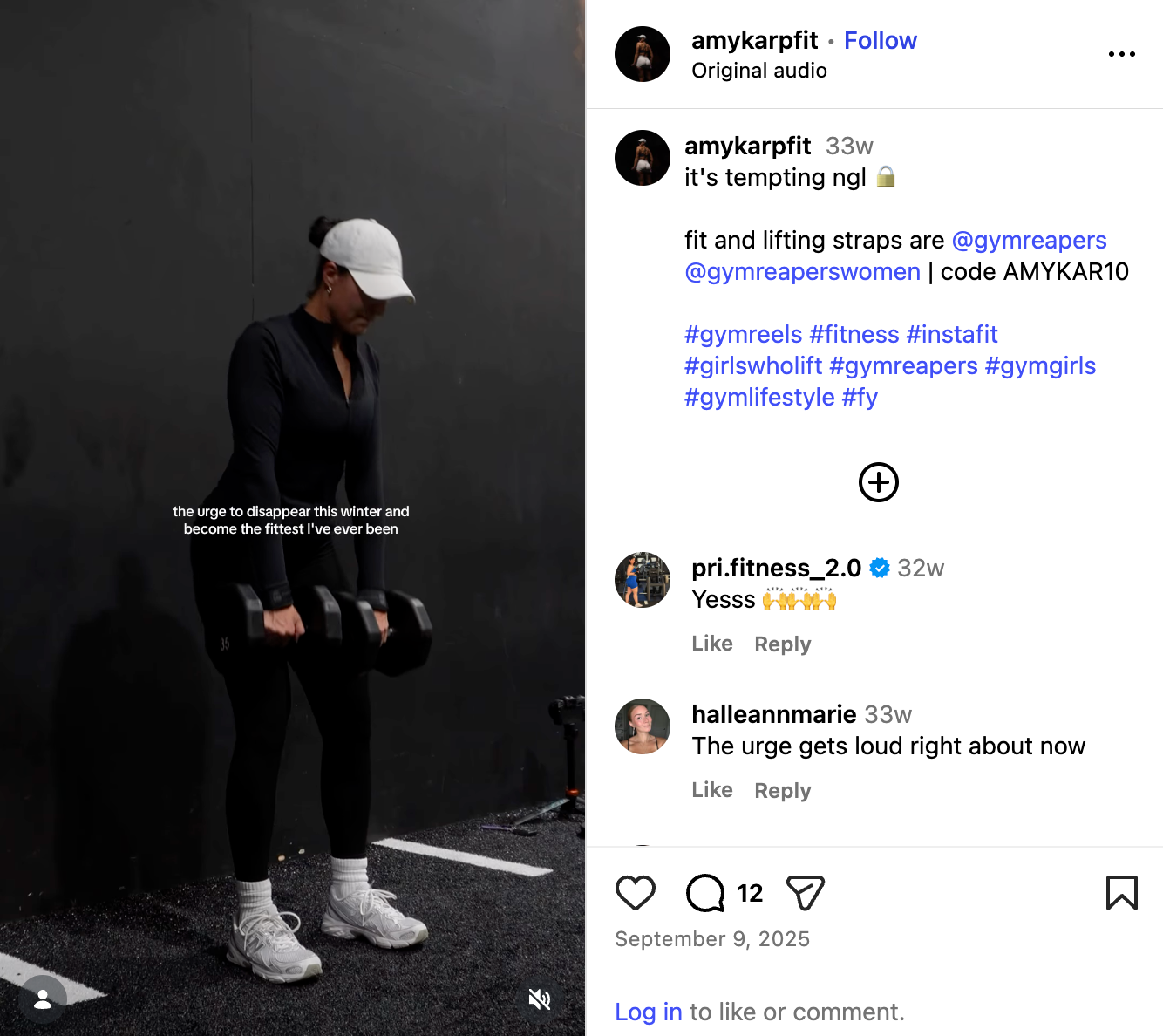
Gymreapers introduced a tiered system where creators move up based on performance. Top tiers focus on athletes who generate both revenue and content, while lower tiers act as a testing ground for newer affiliates.
This created a natural growth loop. The team can bring in new affiliates, identify who performs, and scale those relationships without restarting the process every time.
GYMREAPERS AFFILIATE TIER STRUCTURE
Step 3: Run TikTok as a separate affiliate program
Gymreapers didn’t treat TikTok as just another channel.
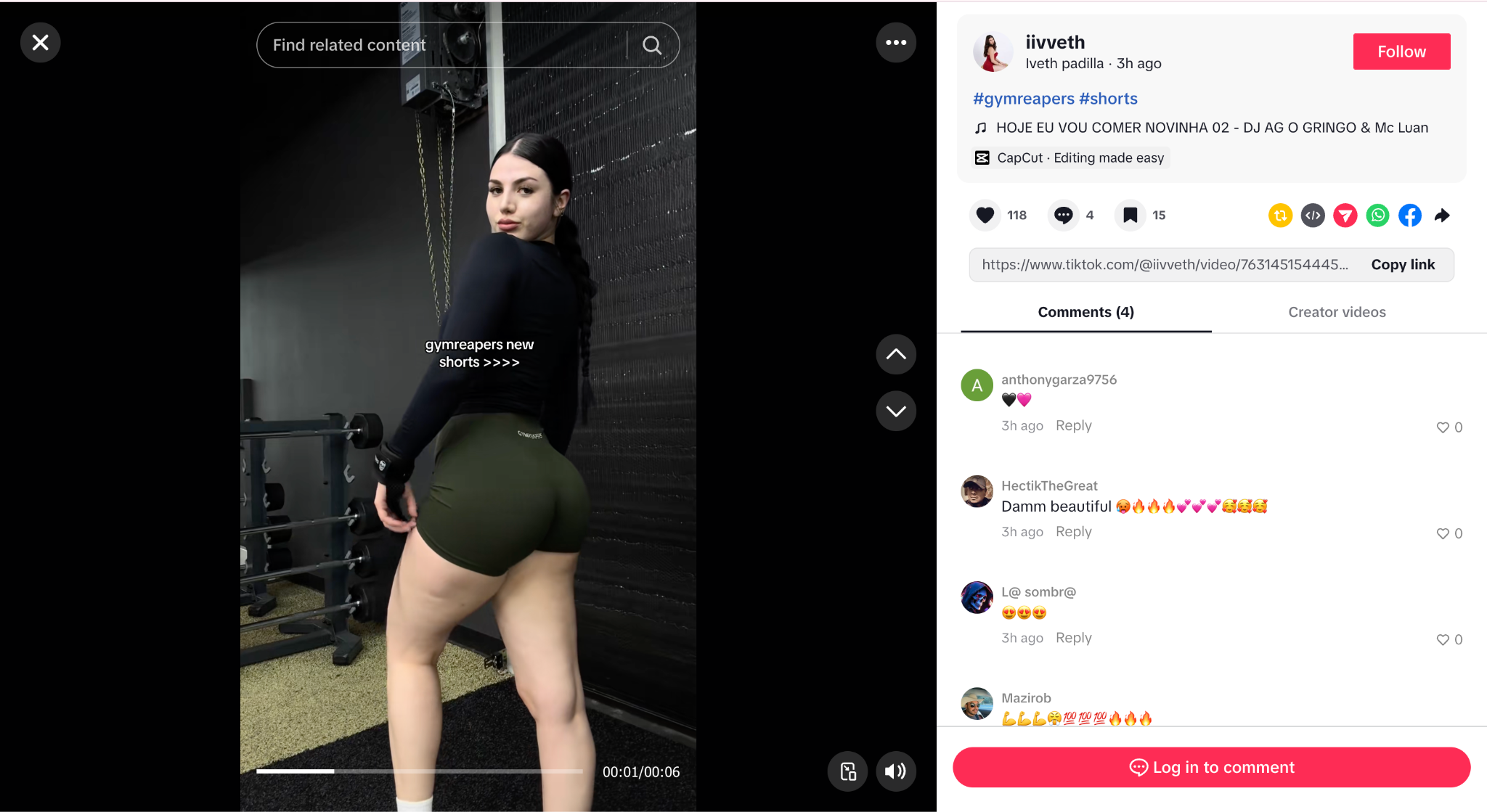
They built a dedicated TikTok affiliate program that runs alongside their DTC setup. Affiliates can earn through both TikTok Shop and traditional links, while the team gets a clear view of where each creator performs best.
Some affiliates convert better on TikTok, while others convert through direct traffic. This setup allows the team to adjust support and strategy based on how each creator actually drives results.
Step 4: Build structured communication into the program
Most affiliate programs fail because communication is inconsistent. Gymreapers fixed this by building structured flows using Klaviyo and Postscript.
They run:
- Monthly affiliate newsletters with performance insights
- Product education to improve content and conversion
- SMS updates for launches and campaigns
- 30/60/90 day re-engagement flows
“We give them just enough strategy so they know what to do.”
This consistency removes guesswork and helps affiliates stay aligned with what’s working.
Step 5: Centralize operations to remove manual work
The final piece was bringing everything into one system.
With Social Snowball, onboarding, tracking, and program management are all managed in one dashboard. The team no longer manages affiliates across Shopify, spreadsheets, or disconnected tools.
This makes it easier to track performance, make decisions faster, and scale without increasing operational overhead. The platform also gives them access to features like creator discovery and flexible payout options, which they can layer in as the program continues to grow.
With Social Snowball, Gymreapers built a high-impact creator strategy
Results: From underperforming channel to repeatable revenue
Once the new structure was in place, the affiliate channel started to show positive results:
- Affiliates now drive 10% of total revenue (up from <2%)
- The program generates $85K–$100K per month
- $550K in revenue driven year-to-date
- Affiliate performance grew 200%+ YoY
- The program delivers a 2–3x ROI, comparable to paid channels
“We’re doing more than double what we were doing before.”
What changed wasn’t just the volume of revenue, but how predictable it became.
Affiliate is now a steady part of the growth mix, not something the team experiments with on the side. The structure, communication, and visibility give the team confidence in what the channel can deliver month after month.
There’s also an impact that doesn’t fully show up in tracked numbers. Athlete-led partnership ads continue to drive new customers who later convert through affiliate links, which means the actual contribution of the program goes beyond direct attribution.
Ready to build an affiliate system that scales?
If your affiliate program feels fragmented, the problem isn’t volume, but structure. Social Snowball helps you:
- Run multiple affiliate programs in one place
- Track performance across creators and channels
- Automate onboarding, communication, and payouts
- Scale affiliates without adding operational overhead


